Jump to Section
- The Heart of the Matter: Deconstructing the Authentic Patatas Bravas Recipe
- The Definitive, Tested-Too-Many-Times Patatas Bravas Recipe
- Frying vs. Baking vs. Air Frying: The Great Potato Debate
- Answering Your Patatas Bravas Recipe Questions (The FAQ)
- Taking Your Patatas Bravas Recipe Further: Variations & Twists
- The Final, Most Important Step
Let's be honest. You've probably had some disappointing patatas bravas before. Soggy potatoes drowned in a ketchup-like sauce that's more sweet than spicy, served at a "tapas" place that's about as Spanish as a sombrero in Stockholm. I've been there. It's a letdown.
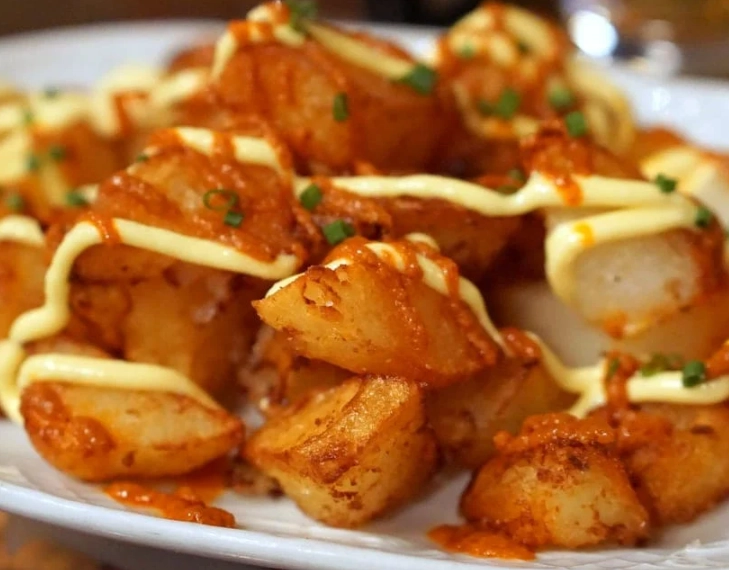
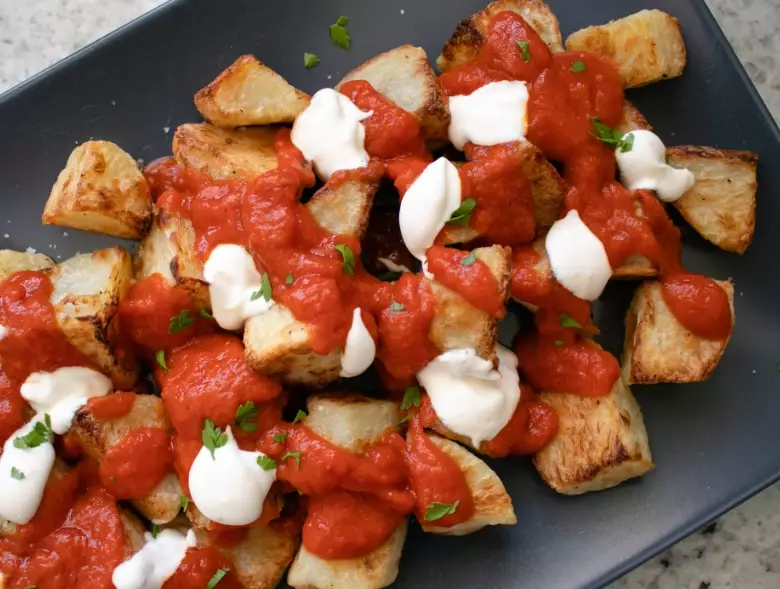
But the real deal? The authentic patatas bravas recipe? That's a different beast entirely. It's a plate of pure, unadulterated joy. Crispy, golden cubes of potato with craggy edges that shatter when you bite into them, generously smothered (or elegantly drizzled, depending on who you ask) with a sauce that's complex, smoky, spicy, and utterly moreish. It's the king of tapas for a reason.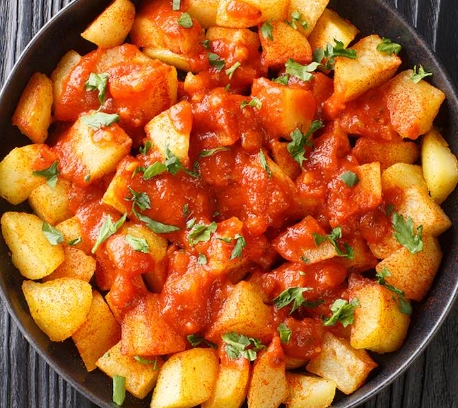
This isn't just another recipe list. Think of this as your field guide to mastering patatas bravas at home. We're going deep—into the history, the sauce wars (yes, there are factions), the cooking science for perfect crispiness, and all the little tweaks that make it yours. We'll tackle the big questions: to bake or to fry? What's the real secret to the bravas sauce? And why do some recipes include mayonnaise?
The Heart of the Matter: Deconstructing the Authentic Patatas Bravas Recipe
Before you even peel a potato, it helps to know what you're aiming for. A proper patatas bravas recipe balances three key elements: the potato, the bravas sauce, and the optional (but highly recommended) aioli.
The Potato: It's All About Texture
Forget waxy potatoes. You need a starchy, floury variety that will give you a fluffy interior and a supremely crispy exterior. In Spain, they often use a type called Kennebec, but don't stress if you can't find them.
- Russet/Idaho: The gold standard for home cooks. High starch, low moisture. Perfect for that fluffy inside/crispy outside dichotomy.
- Maris Piper or King Edward: Excellent UK alternatives, commonly used for roasting and frying.
- Yukon Gold: A decent compromise if it's all you have. They're waxier, so you might not get *quite* the same level of craggy crispness, but the flavor is great.
The Sauce Wars: Two Camps of Bravas Sauce
Here's where things get interesting. Ask five Spanish abuelas for their patatas bravas sauce recipe, and you might get six answers. But they generally fall into two main schools of thought.
Which one is right? Both. I prefer the depth of the tomato-based version for home cooking, but trying the Madrid-style is a fascinating experiment. We'll cover recipes for both.
The Definitive, Tested-Too-Many-Times Patatas Bravas Recipe
Alright, let's get to it. This is my go-to, crowd-pleasing version of a patatas bravas recipe. It's a hybrid that borrows the best from different traditions. It takes a bit of time, but none of the steps are hard. The payoff is immense.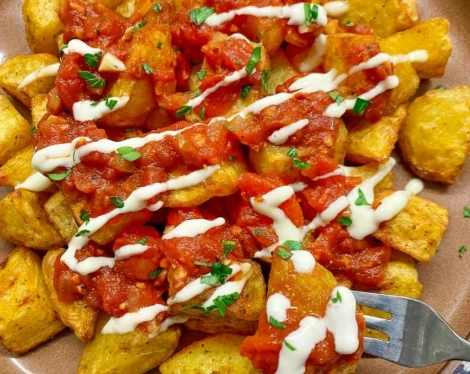
What You'll Need (Serves 4 as a tapa)
For the Potatoes:
- 2 lbs (about 1 kg) Russet potatoes, peeled and cut into 1.5-inch irregular chunks (irregular surfaces = more crisp!)
- Enough olive oil or a neutral oil (like sunflower) for frying (about 4 cups). Yes, you can bake them. We'll get to that.
- 1 tsp fine sea salt
For the Tomato-Based Bravas Sauce:
- 3 tbsp extra virgin olive oil
- 1 small yellow onion, finely chopped
- 4 cloves garlic, minced
- 1 ½ cups (350ml) crushed tomatoes or passata
- 1 ½ tbsp sweet smoked paprika (*Pimentón de la Vera Dulce* – this is non-negotiable for authentic flavor)
- ½ tbsp hot smoked paprika (*Pimentón de la Vera Picante*) or ¼ tsp cayenne pepper (adjust to taste)
- 1 tbsp sherry vinegar or red wine vinegar
- ½ tsp sugar (to balance acidity, optional)
- Salt to taste
- Optional thickener: 1 tsp cornstarch mixed with 1 tbsp water (only if your sauce is too thin)
For the Allioli (Garlic Mayonnaise):
- 1 large egg yolk (at room temperature)
- 1 cup (240ml) mild olive oil or a blend of olive and a neutral oil
- 2-3 garlic cloves, crushed into a paste
- A big pinch of salt
- 1-2 tsp lemon juice or white wine vinegar

The Method: A Step-by-Step Roadmap
Frying vs. Baking vs. Air Frying: The Great Potato Debate
Let's settle this. What's the best way to cook the potatoes for your patatas bravas recipe? Each method has its pros and cons, and honestly, it depends on your priorities.
| Method | Result | Effort & Clean-up | My Verdict |
|---|---|---|---|
| Deep Frying (Double Fry) | Gold Standard. Unbeatable crispiness, fluffy interior, authentic texture and flavor. | High effort. Needs lots of oil, a thermometer, and dealing with hot oil disposal. | For a special occasion or when you want the real deal. Worth the hassle. |
| Oven Roasting | Very Good. Crispy edges, healthy-ish. Can be slightly drier inside than fried. | Low effort. Just toss and bake. Easy clean-up. | My go-to for a weeknight. Reliable and 85% as good as fried. Use plenty of oil! |
| Air Frying | Good. Crispy exterior, but potatoes can sometimes end up a bit tough or dry if not done right. | Very easy. Minimal oil, quick pre-heat. | Great for a single portion. Requires experimentation with time/temp for perfect results. |
| Shallow Frying | Excellent. Close to deep-fried results, especially with the double-fry method. | Medium effort. Less oil than deep-frying, but requires attentive flipping. | A fantastic middle ground. Gets you 95% of the way there with less oil. |
My advice? Try deep-frying once to know what the ideal is. Then, for regular cooking, become a master of oven-roasting. The key to oven success is space—don't crowd the pan—and enough fat.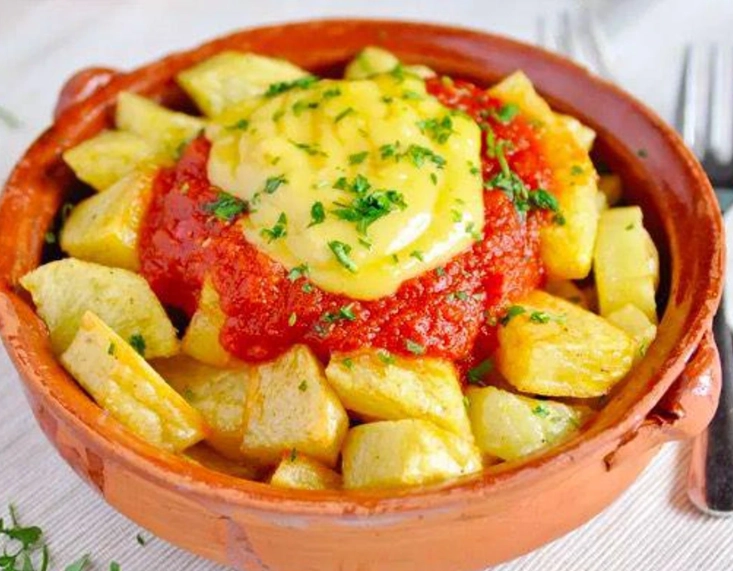
Answering Your Patatas Bravas Recipe Questions (The FAQ)
Over the years, I've gotten the same questions from friends and readers. Here are the answers I wish I had when I started.
Taking Your Patatas Bravas Recipe Further: Variations & Twists
Once you've mastered the classic, the world is your oyster (or your patata). Here are some popular spins you might encounter or want to try.
Patatas Bravas con Huevo: Top the finished dish with a fried or poached egg. The runny yolk mixing with the sauces is a religious experience.
Patatas Bravas con Chorizo: Crisp up some diced Spanish chorizo in a pan and scatter it over the top. Adds a salty, spicy, meaty punch.
Brava-spiced Aioli: Skip the two-sauce system and make one killer sauce by folding some of your bravas sauce (or just smoked paprika and garlic) into the allioli. It's simpler and still fantastic.
Sweet Potato Bravas: A modern, healthier twist. Sweet potatoes have more moisture, so they won't get as crisp, but the flavor combo with the spicy sauce is incredible. Roast them, don't fry them.
The Final, Most Important Step
Grab a cold beer—a Spanish lager like Estrella Damm or Mahou if you can find it—or a glass of crisp, dry sherry (Fino or Manzanilla). Patatas bravas are social food. Share the plate. Argue about whether there's enough sauce. Double-dip. Get garlic on your chin.
The ultimate goal of any patatas bravas recipe isn't just to follow steps. It's to recreate a feeling—the lively, communal, slightly chaotic joy of a Spanish tapas bar in your own home. Don't get bogged down in perfection. Even if your potatoes are a tad soft or your sauce a bit too fiery, you're on the right track. You're making real food with real flavor.
Now, go turn up some flamenco music (or whatever gets you in the mood), and get cooking. Your perfect plate of patatas bravas is waiting.