Let's be honest. A roast dinner feels incomplete without them. Those golden, crispy, airy cups that sit next to your beef, ready to soak up gravy. But for many home cooks, achieving consistent, tall Yorkshire puddings feels like a culinary lottery. Sometimes they soar, sometimes they're sad and flat. I've been there. My first attempt was a disaster—dense, oily little pucks. But after years of testing, failing, and finally succeeding (and consulting sources like BBC Good Food's classic recipe for benchmark testing), I've cracked the code.
It's not magic. It's simple, unforgiving science. Get three things right, and you're golden every single time.
What You'll Find in This Guide
The Simple Science Behind the Perfect Puff
Forget fancy techniques. Yorkshire pudding success hinges on mastering three physical reactions. Miss one, and the structure fails.
1. Steam is Your Engine
This is the primary lifting force. When your cold batter hits the searing hot fat in the tin, the liquid in the batter (milk, eggs) instantly vaporizes into steam. This violent expansion pushes the batter upwards and outwards, creating the initial rise. If the fat isn't hot enough? The steam production is weak, and your puddings will be stunted.
2. Protein Sets the Structure
As the batter rises, the heat cooks the proteins in the eggs and flour. They coagulate, forming a rigid, hollow shell that traps the steam inside and sets the shape. This is why the ratio of eggs to flour is non-negotiable—eggs provide the structural protein framework.
3. Starch Provides the Crisp
While the proteins set the shape, the starch in the flour gelatinizes and then dehydrates in the intense oven heat. This process is what gives you that irresistible, crispy, slightly brittle exterior. A wetter batter (more milk) can sometimes delay crispiness, leading to a softer result.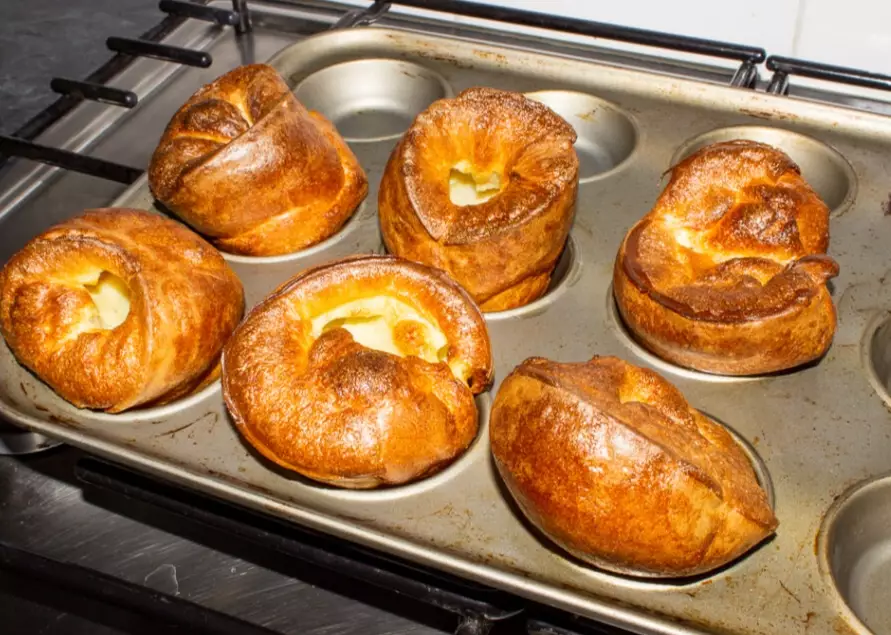
My Foolproof Step-by-Step Recipe
This is the core ratio I've settled on after countless Sundays. It's scalable, reliable, and delivers a balanced pudding—crispy edges, soft middle, great height.
| Ingredient | Quantity | Role & Why It Matters |
|---|---|---|
| Plain (All-Purpose) Flour | 140g (1 cup + 2 tbsp) | Provides structure and crispness. Don't use self-raising. |
| Large Eggs | 4 | The essential protein for the rise and structure. |
| Whole Milk | 200ml (¾ cup + 2 tbsp) | Hydrates the batter. Semi-skimmed works, but whole adds richness. |
| Cold Water | 75ml (⅓ cup) | Thins the batter slightly for a lighter result. |
| Salt | ½ tsp | Enhances flavor. Crucial, even in a savory dish. |
Equipment: A 12-hole muffin tin is perfect for consistent, deep puddings. A Yorkshire pudding tin (with shallower, wider cups) is traditional but less forgiving. A good balloon whisk and a large jug for pouring.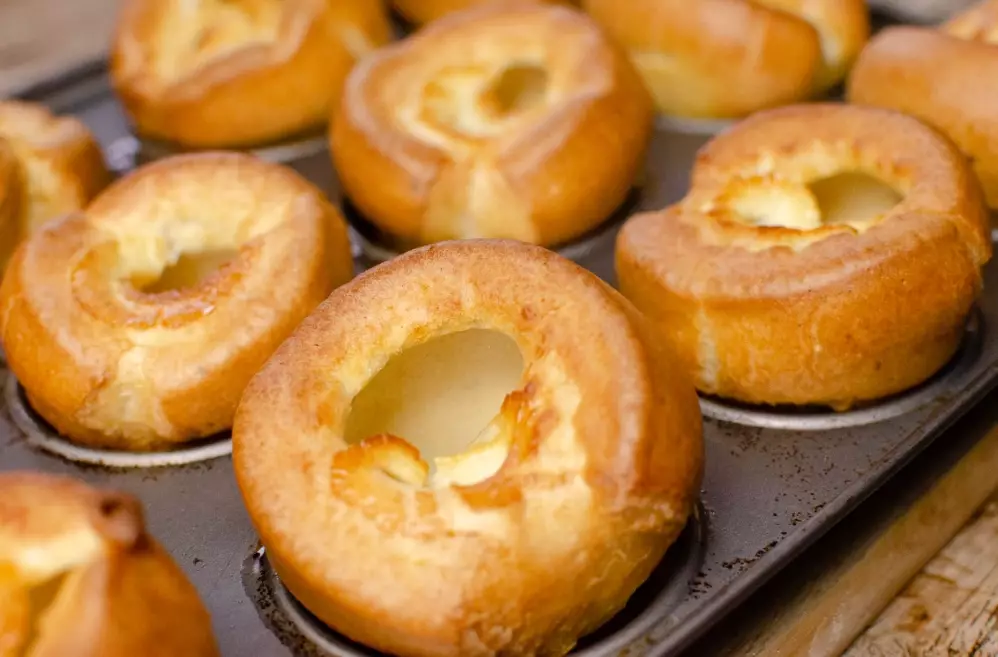
The Method (Timing is Everything)
- Make the batter early. At least 1 hour before, ideally the night before. Sift the flour and salt into a bowl. Make a well and crack in the eggs. Whisk the eggs, gradually drawing in the flour from the sides. Once combined, slowly whisk in the milk and water until you have a smooth batter with the consistency of single cream. A few tiny lumps are fine—do not over-mix. Cover and refrigerate.
- Preheat with violence. 30 minutes before baking, place your empty muffin tin on a high shelf in the oven. Crank the heat to 220°C (425°F) fan / 240°C (465°F) conventional. The tin must be blisteringly hot.
- The hot fat moment. Carefully pull the hot tin out (use oven gloves!). Add about 1-2 teaspoons of beef dripping or oil to each hole—it should sizzle and shimmer immediately. Swirl it around. Quickly pour your batter (now at room temp) into each hole, filling them about halfway to two-thirds full.
- Bake with faith. Immediately return the tin to the oven. Do NOT open the door for at least 20 minutes. The initial blast of heat is critical. Bake for 20-25 minutes total until deeply golden, crisp, and proudly puffed.
- Serve immediately. They wait for no one. The crispness is at its peak straight from the oven.
The 3 Most Common Mistakes (And How to Fix Them)
These are the silent killers of a good Yorkshire pudding. I've committed each one.
Mistake 1: Lukewarm Fat
The oil must be smoking hot. Not warm, not hot—smoking. If you pour batter into oil that just shimmers, you've already lost. The instant steam explosion won't happen. Fix: Preheat the tin in the oven for a full 30 minutes. The fat should be so hot it almost frightens you.
Mistake 2: Overworking the Batter
Vigorous whisking develops gluten, which is great for bread, terrible for puddings. It makes them tough and chewy, preventing a light, airy rise. Fix: Mix just until the flour is incorporated. A slightly lumpy batter is a happy batter. Letting it rest also relaxes any developed gluten.
Mistake 3: The Premature Peek
Opening the oven door in the first 15 minutes is like popping a balloon mid-inflation. The temperature plummets, the steam condenses, and the rising structure collapses. Fix: Use the oven light if you have one. Otherwise, trust the process. Set a timer and walk away.
Beyond the Basics: Flavor Twists & Serving Ideas
Once you've nailed the classic, play around. Here are a few things I love doing.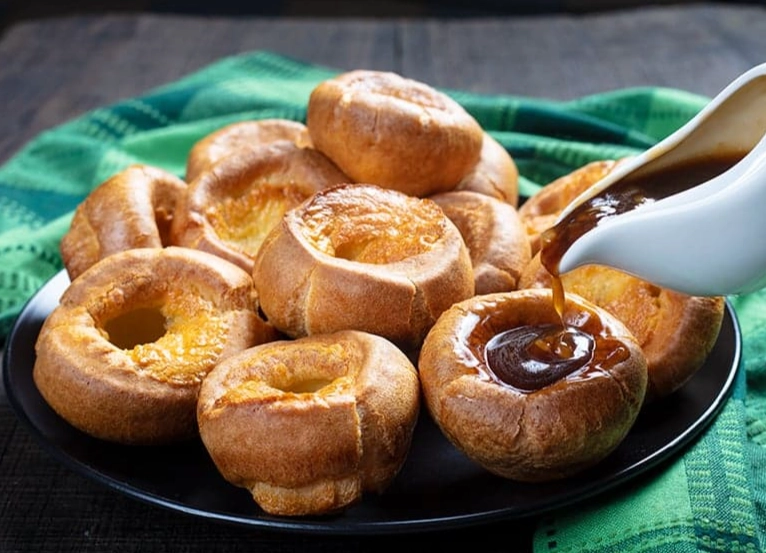
For the batter: Add a teaspoon of whole grain mustard or a generous grinding of black pepper. Freshly chopped rosemary or thyme is fantastic, especially with lamb.
The Toad-in-the-Hole upgrade: Brown some good pork sausages first, then place them in the hot tin with the fat. Pour the batter around them. It’s a full meal.
Leftover heaven: Cold Yorkshires the next day? Don't throw them out. Crumble them over a stew like giant croutons, or split and toast them lightly to serve with jam for a very non-traditional but delicious breakfast.
Your Yorkshire Pudding Questions Answered
 So there you have it. It's less about following a recipe to the letter and more about understanding why each step exists. Respect the heat, don't fuss with the batter, and be patient. Once that becomes second nature, you'll never have a flat pudding again. The sound of that sizzle when the batter hits the tin? That's the sound of success.