Your Guide to the Perfect Bite
Let's be honest. The first time you see a real muffuletta, it's a little intimidating. It's huge. It's packed with layers of meat and cheese you can barely see through. And that olive salad spilling out the sides? It looks messy in the best possible way. I remember my first one at a cramped deli in the French Quarter. I thought, "There's no way I can eat this whole thing." I was wrong. I demolished it. And then I spent years trying to recreate that perfect balance of salty, tangy, savory, and chewy at home. Sometimes it was a disaster—soggy bread, bland salad, the whole thing falling apart. But after more attempts than I'd like to admit, I finally cracked the code. This isn't just a muffuletta recipe; it's a blueprint for building the soul of New Orleans in your own kitchen, without a plane ticket.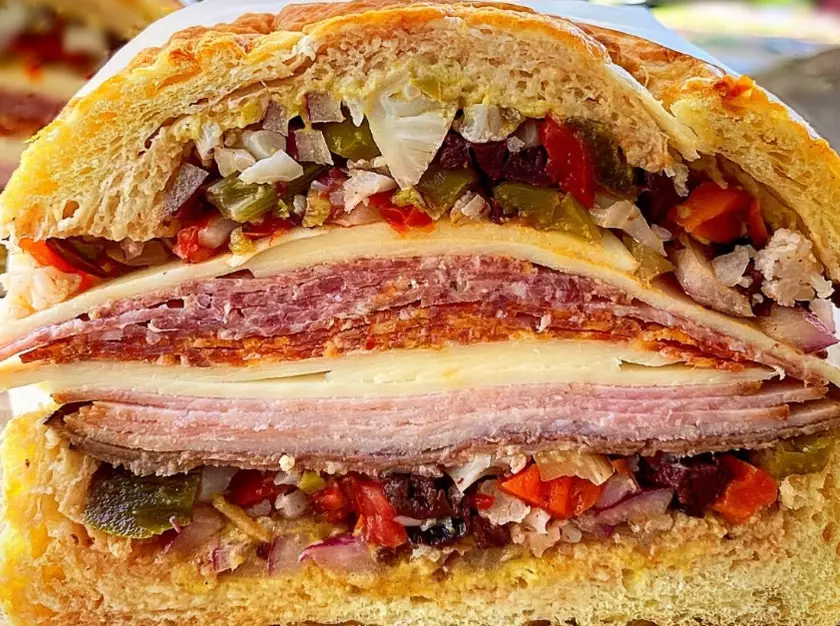
So, what is a muffuletta, really? It's not just a sandwich. It's a specific experience. Born in the early 1900s at Central Grocery on Decatur Street (though others, like Salvatore Lupo at Lupo's, also claim its creation), it was food for Sicilian immigrant workers. They needed something hearty, portable, and able to last a long workday. The genius was using a round, sesame-seeded Sicilian loaf called a muffuletta (that's where the name comes from) and stuffing it with Italian cold cuts, cheese, and a violently flavorful olive salad. The secret? You let it sit. You wrap it tight and let the olive oil and juices from the salad soak into the bread, transforming it from a mere vessel into an integral, softened, flavor-packed component. A great muffuletta recipe understands this alchemy.
The Heart of the Matter: Deconstructing the Muffuletta Recipe
You can't just throw any Italian meats between two slices of bread and call it a muffuletta. The magic is in the specific combination and, more importantly, the order of operations. Think of it like building a flavor skyscraper—you need a solid foundation.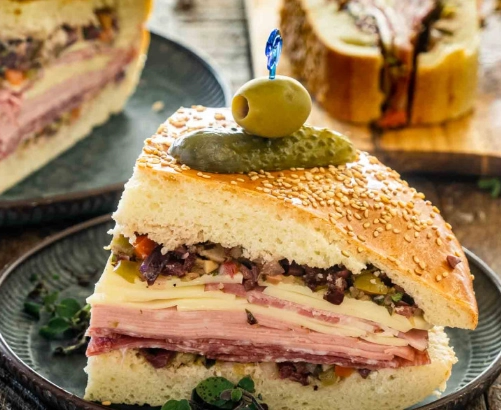
The Non-Negotiable: The Olive Salad
This is the MVP. The star. The ingredient that makes or breaks your muffuletta. A store-bought jar of chopped olives won't cut it. I've tried. It tastes flat and one-dimensional. You need a mix of textures and brine. The classic base is a combination of green and black olives (I prefer Cerignola and Kalamata for their meatiness and punch), giardiniera (that pickled cauliflower, carrot, and celery mix), capers, garlic, oregano, and a good glug of olive oil and red wine vinegar. You chop it all up, but not into a paste—you want identifiable bits. Then you let it marinate. Overnight is good. Two days is better. This isn't a step you skip. The official New Orleans tourism site even highlights the olive salad as the defining feature. It's what seeps into the bread and ties every bite together.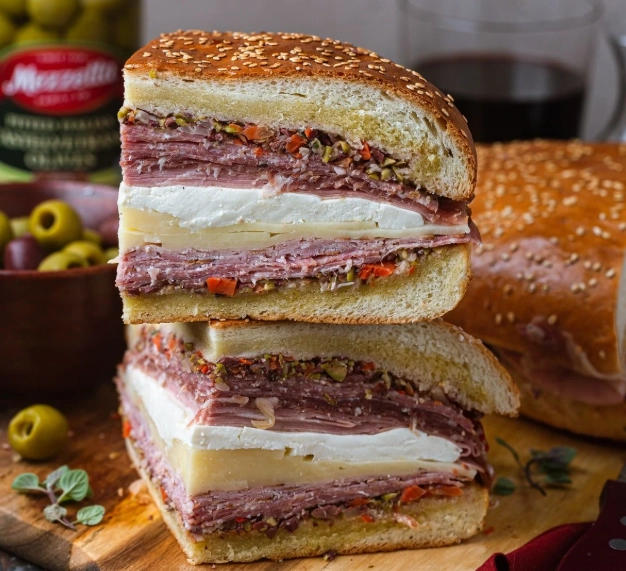
Here's my go-to base recipe, but feel free to play. Add some chopped pepperoncini for heat, or a spoonful of anchovy paste for depth (don't knock it till you've tried it).
- 1 cup pitted green olives (like Cerignola)
- 1 cup pitted black olives (like Kalamata)
- 1 cup giardiniera, drained
- 2-3 cloves garlic, minced
- 2 tbsp capers, drained
- 1 tbsp dried oregano
- 1/2 cup extra virgin olive oil
- 1/4 cup red wine vinegar
- Freshly cracked black pepper
Chop everything to a relish-like consistency, mix in a bowl, cover, and refrigerate. Give it a stir whenever you open the fridge. The longer it sits, the more the flavors get to know each other.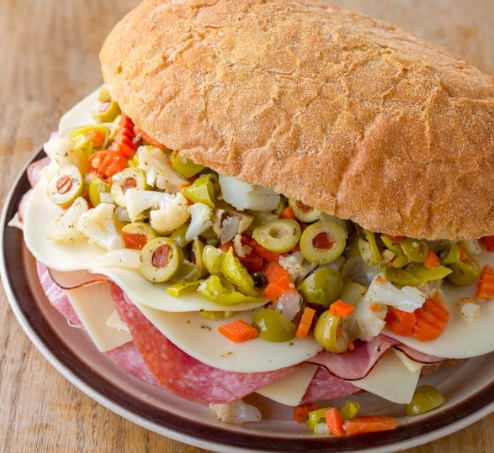
The Structural Support: Bread, Meats, and Cheese
Now for the building materials. Getting these wrong is the most common home cook mistake. Let's break it down.
The Bread: The ideal is a large, round, 10-inch loaf of Sicilian sesame bread. It has a sturdy, slightly dense crumb and a crisp crust that holds up to moisture. Can't find it? Your best substitutes are a large round Italian loaf or even a sturdy focaccia. Avoid airy, holey breads at all costs. You need structure.
The Meats & Cheese: Tradition calls for a specific trio of cured meats and one cheese. This is where a good butcher or deli counter is your friend. You want thin slices, not thick cuts.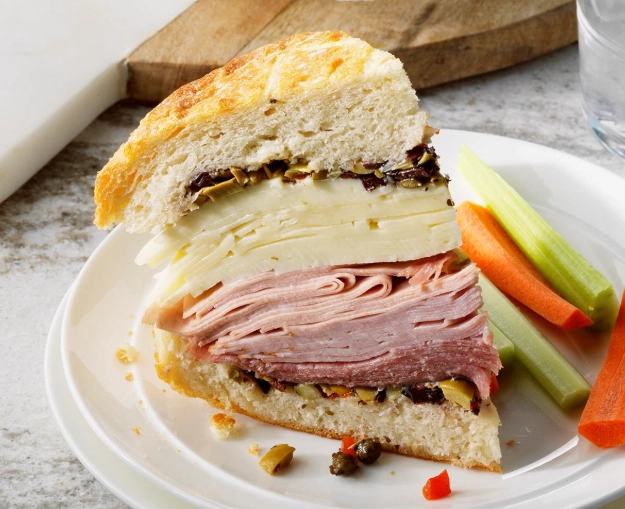
| Ingredient | Traditional Choice | Why It Works | Potential Substitutes (If You Must) |
|---|---|---|---|
| Mortadella | Yes, with pistachios. | Provides a creamy, fatty, mild base layer. | Bologna (a distant cousin) or extra ham. |
| Genoa Salami | Essential. | Adds a sharp, fermented, garlicky punch. | Hard salami or soppressata. |
| Capicola (Gabagool) | Usually the spicy kind. | Brings a peppery kick and beautiful marbled fat. | Prosciutto cotto (cooked ham) or regular ham. |
| Provolone Cheese | The one and only. | Sharp, melts slightly, holds its shape. Not too creamy. | Fontina or young Asiago. Avoid mozzarella—it's too wet. |
You'll need about 1/4 to 1/3 pound of each meat and cheese for a full 10-inch sandwich. Don't skimp. The layers matter.
The Assembly Line: Building Your Masterpiece
Here's where the magic happens. It's not complicated, but there's a rhythm to it.
- Prep the Bread: Slice your round loaf horizontally. Scoop out some of the soft interior from both the top and bottom halves. This isn't being fancy; it creates a well for more filling and helps prevent the dreaded "filling squeeze-out" on the first bite. Save the bread crumbs for meatballs or breading.
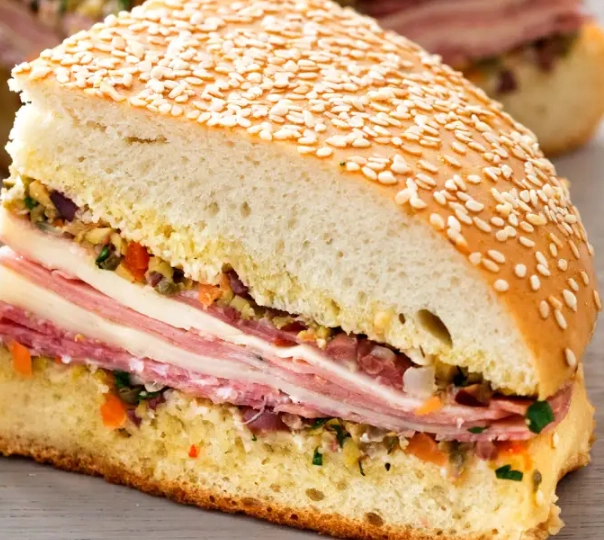
- Paint with Juice: Take a few spoonfuls of the oily, vinegary liquid from your marinated olive salad and brush or drizzle it generously over the cut sides of both bread halves. This is the first layer of flavor infusion. Don't be shy.
- Layer the Olive Salad: Pack a thick, even layer of the chopped olive salad onto the bottom half of the bread. I'm talking at least half an inch thick. This is the foundation's flavor core.
- Stack the Meats and Cheese: Now, layer your meats and cheese. The order isn't set in stone, but I like this sequence from bottom to top: provolone, mortadella, salami, capicola. The cheese against the olive salad acts as a bit of a moisture barrier for the meat. Layer them evenly, letting them drape over the edges slightly.
- Top it Off: Add another, slightly thinner layer of olive salad on top of the meat. Place the top half of the bread on.
- The Waiting Game (The Most Important Step): Wrap the entire, massive sandwich tightly in plastic wrap or butcher paper. Then, place it on a plate or tray, put a heavy skillet or a few cans on top to press it down slightly, and refrigerate it. For at least one hour. Three is better. This pressing and resting time is what transforms ingredients into a muffuletta. The juices marry, the bread softens just enough, and everything becomes one cohesive unit.
Beyond the Classic: Variations and Answering Your Questions
Once you've mastered the basic muffuletta recipe, the world is your oyster... or olive. But first, let's tackle the questions that pop up every time I talk about this sandwich.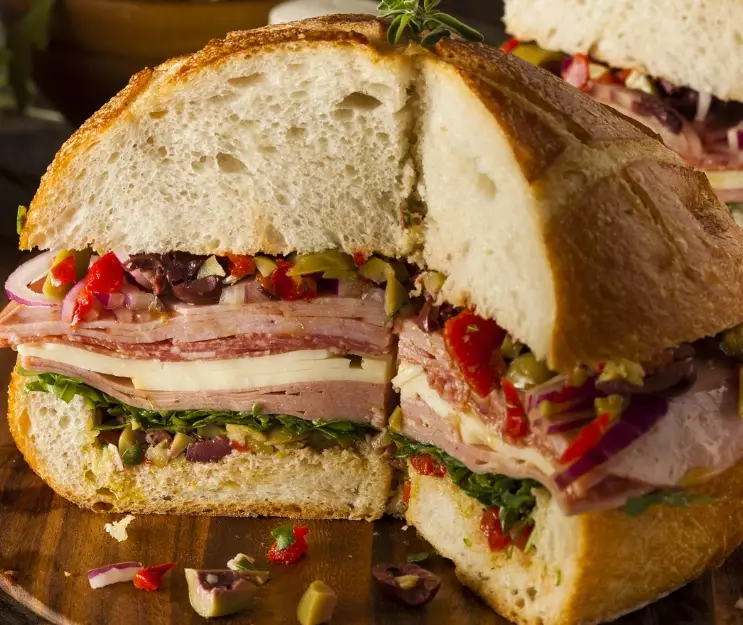
Muffuletta FAQ: Stuff People Really Want to Know
Creative Twists on the Classic Muffuletta Recipe
Feeling adventurous? Here are a few spins that have worked for me (and one that didn't).
- The "Seafood" Muffuletta: Swap the cured meats for chilled, boiled shrimp and lump crabmeat tossed with a little lemon and Old Bay. Use a lighter hand with the olive salad. Surprisingly refreshing.
- The "Thanksgiving" Muffuletta: Use sliced roasted turkey, a smear of cranberry sauce mixed into the olive salad, and stuff with dressing/stuffing. It's a leftover game-changer.
- The "Breakfast" Muffuletta: Scrambled eggs, crispy bacon or sausage, and sharp cheddar. Use a less vinegary olive salad or even a sun-dried tomato tapenade. Press it in a panini press. Divine.
The failed experiment?
A "dessert muffuletta" with Nutella, mascarpone, and candied fruit. The concept was sound, but the execution was a sticky, overly sweet disaster. Some traditions are best left alone.
Serving, Slicing, and the Final Verdict
When your waiting time is up, unwrap your masterpiece. Place it on a large cutting board. Using a long, serrated bread knife, cut it into quarters or sixths. The classic wedge shape is part of the presentation. Serve it with pickles, more giardiniera, and potato chips or a simple side salad. Have plenty of paper towels on hand.
So, is going through all this worth it compared to just buying a sandwich? For a regular Tuesday lunch, probably not. But for a game day, a picnic, a party, or when you just want to treat yourself to a project with a delicious payoff, 100% yes. The process is fun, the result is incredibly impressive, and the taste is transportive.
The beauty of this muffuletta recipe is its flexibility within a framework. Respect the bread, worship the olive salad, layer with care, and above all, be patient. Do that, and you'll have a sandwich that's not just food, but a conversation piece—a taste of New Orleans history made with your own two hands.
At the end of the day, the best muffuletta recipe is the one that makes you happy. Maybe you love extra capicola. Maybe you want to add hot peppers. Maybe you only have ham and Swiss. That's okay. Use the principles here as your guide, not your prison. Start with a classic, then make it your own. Now go forth, make a mess, and enjoy every gloriously messy bite.