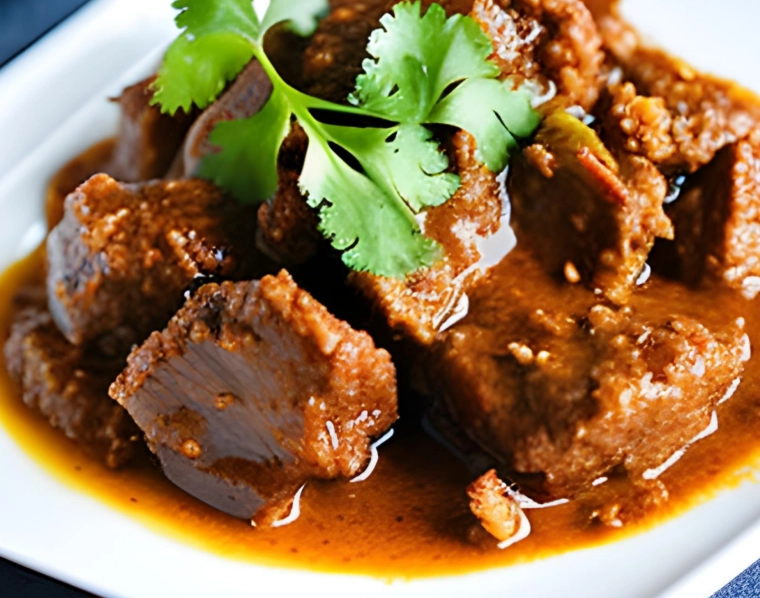
Let's be honest. The idea of whipping up a Japanese stir-fry at home can feel intimidating. You picture complex sauces, hard-to-find ingredients, and a result that's just... not quite right. I've been there. My first attempt at yaki udon was a salty, soggy disaster. But after years of tweaking—and eating my way through enough izakayas to fund a small vacation—I cracked the code.
This isn't just another yaki udon recipe. It's the one that finally worked for me, a home cook who values flavor over fuss. It's the reason I stopped ordering takeout on busy weeknights. We're going to build a dish with that perfect balance: chewy udon noodles, crisp-tender vegetables, and a savory-sweet sauce that coats every bite without drowning it.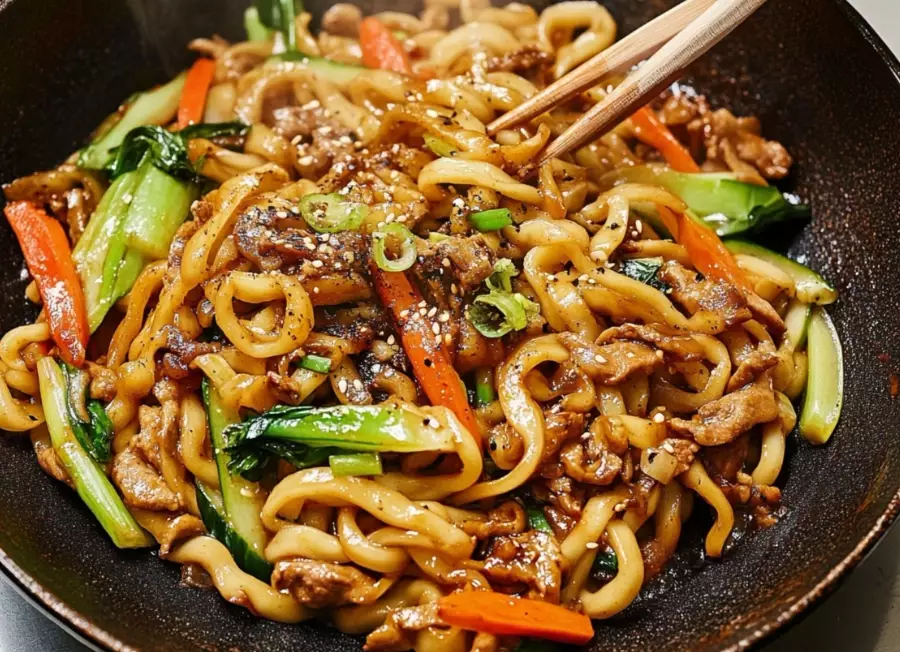
The best part? It comes together faster than delivery.
What's Inside This Guide
Mastering the Essential Ingredients
Great yaki udon starts with understanding what each component brings to the table. This isn't about rigid rules, but knowing what's essential and where you can play.
| Ingredient | Why It's Here & Pro Tips |
|---|---|
| Udon Noodles | Use the pre-cooked, vacuum-sealed kind found in the refrigerated section of Asian markets. They're par-boiled, so they just need warming through. Fresh or frozen udon works too, but requires boiling first. Dried udon? Save it for soup. |
| Protein (Pork, Chicken, Shrimp) | Thinly sliced pork belly or shoulder is traditional. Chicken thigh stays juicier than breast. For shrimp, pat them bone-dry before cooking. Marinate your protein in a splash of soy sauce and sake for 10 minutes if you have time—it makes a difference. |
| Cabbage & Carrots | The backbone veggies. Slice the cabbage into 1-inch squares, not shreds. Shreds wilt too fast. Julienne the carrot—thin matchsticks cook evenly and look professional. |
| Sauce Trio: Soy, Mirin, Sugar | This is the soul. Use a standard Japanese soy sauce (like Kikkoman). Mirin is sweet rice wine, not just sugar syrup. It adds depth. If you must sub, use a dry sherry with a pinch of sugar. The small amount of sugar (just a teaspoon!) is non-negotiable for that glossy, balanced glaze. |
| Aromatics: Garlic, Ginger, Green Onion | Freshly minced. No jars. The ginger should singe slightly in the hot oil—that's where a lot of the fragrance comes from. Save half the green onions for a raw garnish at the end for a pop of freshness. |
My Non-Negotiable: A well-seasoned carbon steel wok or a large, heavy-bottomed skillet. A non-stick pan won't get hot enough to give you that essential "wok hei"—the slight smoky char that elevates good stir-fry to great stir-fry.
Your Foolproof Step-by-Step Process
I'll walk you through this like we're cooking together in my kitchen. The key is mise en place—having everything chopped, measured, and within arm's reach. Stir-frying is a fast dance.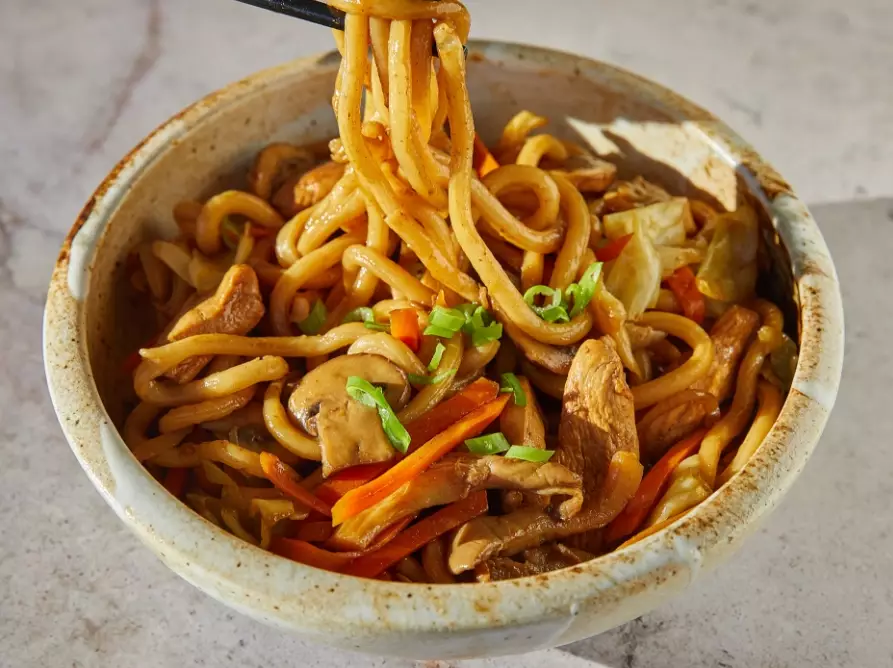
1. Prep is Everything (No, Really)
Open your udon package and loosen the noodles under running warm water. Separate them with your fingers. Pat them dry-ish with a paper towel. This prevents a starchy, clumpy mess later.
Cut all your vegetables. Slice your protein. Mince the garlic and ginger. Measure your sauce ingredients into a small bowl—2 tbsp soy sauce, 1 tbsp mirin, 1 tsp sugar. Having it ready means you won't over-cook anything while you fumble with bottles.
2. The Stir-Fry Sequence: Order Matters
Heat your wok or skillet over high heat until a drop of water sizzles and evaporates instantly. Add a neutral oil with a high smoke point (canola, avocado).
Cook your protein first. Get a good sear, then remove it to a plate. It will finish cooking later. If you leave it in, it'll overcook and toughen.
Add a bit more oil, then the carrots. Stir for 30 seconds. They need a head start. Then toss in the cabbage. The goal is vibrant and crisp-tender, not mushy. Push them to the side.
Now, the aromatics. Add the garlic, ginger, and the white parts of the green onions right into the space you created. Let them sizzle for just 15 seconds until fragrant—any longer and they'll burn.
3. The Grand Finale: Noodles and Sauce
Here's where most recipes get it wrong. Add the loosened udon noodles and the cooked protein back into the wok. Toss everything together for a minute to heat the noodles through.
Now, pour your pre-mixed sauce around the sides of the wok, not directly on top of the noodles. The hot metal will immediately sizzle and reduce the sauce slightly. Toss vigorously for another 60-90 seconds. You'll see the sauce thicken and coat everything in a beautiful, shiny glaze.
Kill the heat. Stir in the remaining green onion tops. Done.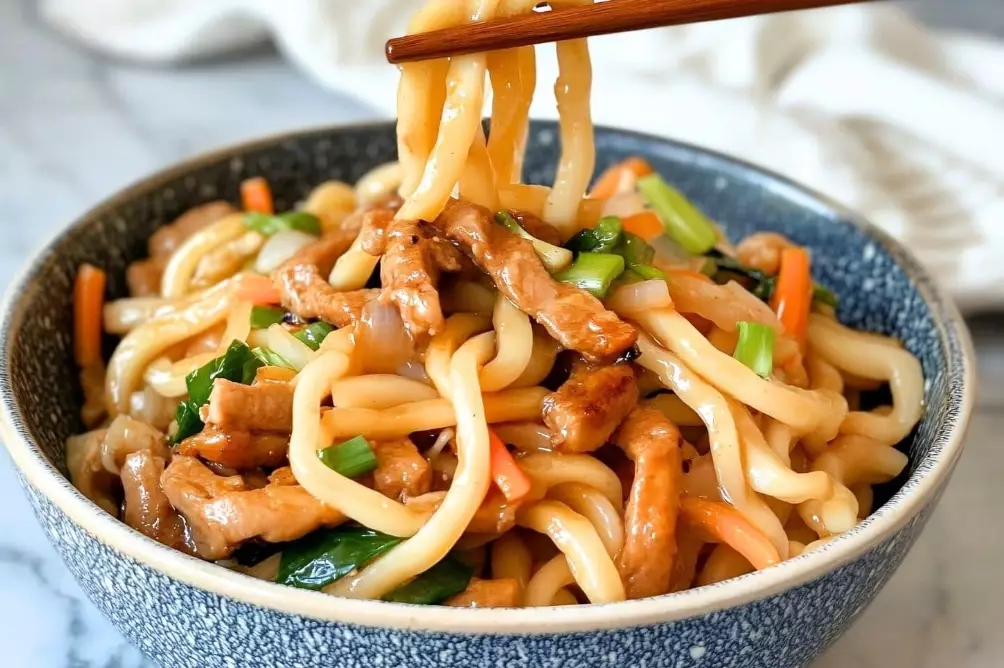
Listen to the Pan: If things are cooking too fast and starting to smoke aggressively, lower the heat slightly. If nothing is sizzling, your pan wasn't hot enough to start. Don't be afraid to adjust. Cooking is sensory.
The 3 Mistakes That Ruin Yaki Udon (And How to Avoid Them)
I've made these so you don't have to.
Mistake #1: The Wet Noodle Catastrophe. Using noodles straight from the package without separating and drying them leads to steaming, not frying. Your dish becomes a watery, bland pile. The fix is simple: rinse, separate, pat.
Mistake #2: The Vegetable Flood. Adding all vegetables at once. Dense carrots need more time than cabbage. Bean sprouts (if using) should go in last, literally for 30 seconds. Respect the cook time hierarchy.
Mistake #3: Sauce-Dumping Syndrome. Pouring the cold sauce mixture into the center of the wok cools everything down and creates a pool of liquid. By pouring it onto the hot surface and letting it caramelize for a moment before tossing, you create an integrated glaze. This one trick elevated my yaki udon from "okay" to "oh wow."
How to Customize Your Yaki Udon Bowl
The basic framework is your playground. Here are some winning combinations based on what I keep in my fridge.
The Classic Plus: Follow the base recipe, but add a handful of bean sprouts with the cabbage, and finish with a sprinkle of katsuobushi (bonito flakes) and aonori (seaweed flakes) on top. The flakes dance from the residual heat.
The Spicy Kick: Add a teaspoon of doubanjiang (Chinese chili bean paste) or a squirt of sriracha to the sauce mix. Garnish with sliced fresh chili.
The Veggie-Packed: Swap the meat for thick slices of king oyster mushroom, pan-fried until golden. Add sliced bell peppers and snap peas with the carrots.
Trust me on this. Once you get the basic technique down, you'll find yourself making yaki udon with whatever's left in the produce drawer. It's that versatile.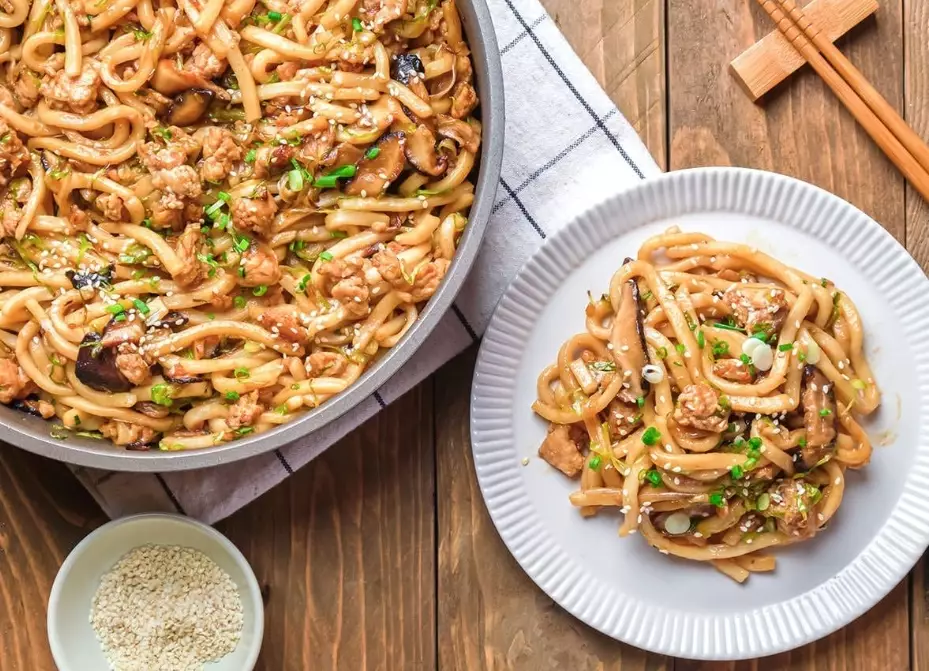
Your Yaki Udon Questions, Answered
What's the biggest mistake people make with yaki udon sauce?
Can I use fresh udon noodles instead of the pre-cooked kind?
My yaki udon always turns out soggy. How do I fix this?
What's a good vegetarian substitute for the pork or chicken?
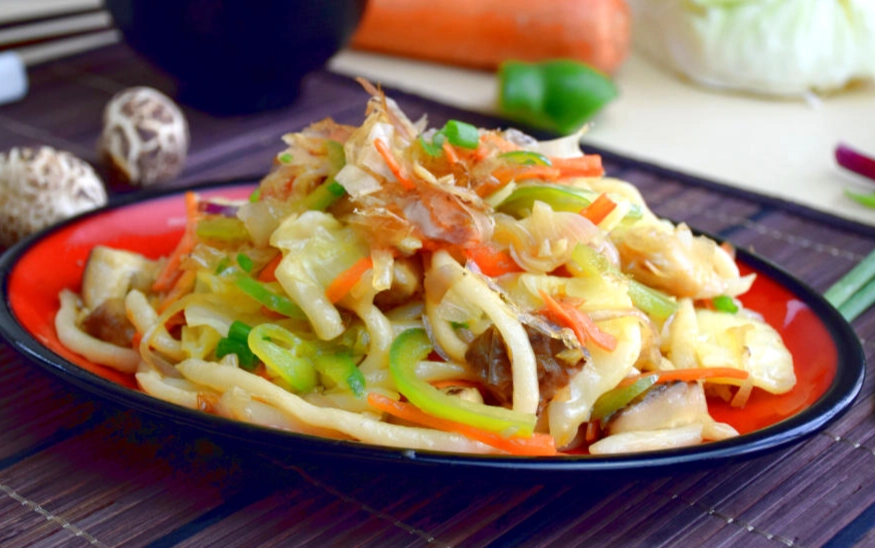 There you have it. Your path from soggy disappointment to restaurant-worthy yaki udon at home. It's not about fancy techniques, just a few mindful steps and understanding how the ingredients work together. Grab your wok, turn up the heat, and give it a try. Your next favorite weeknight dinner is waiting.