You know that feeling. You're back from a trip to Rome or Florence, and you can't stop thinking about the gelato. The intense pistachio from that tiny shop near the Pantheon. The impossibly creamy stracciatella you had after dinner. You try the supermarket stuff, but it's just not the same—too sweet, too airy, too hard. So you search for "recipes for gelato Italian," hoping to recreate that magic. Good news: you absolutely can. Bad news: most recipes online get a few critical things wrong, leading to icy, bland, or overly rich results. After years of trial, error, and chatting with gelatai in Italy, I've nailed down the methods that actually work at home. Let's ditch the approximations and make the real deal.
What You'll Learn Inside
- What Makes Italian Gelato Different?
- The Non-Negotiable Ingredients for Authenticity
- Recipe 1: Fior di Latte (The Pure Milk Canvas)
- Recipe 2: Real Sicilian Pistachio Gelato
- Recipe 3: Deep, Dark Cioccolato Fondente
- The 3 Biggest Mistakes (And How to Dodge Them)
- Serving & Storing Like a Pro
- Your Gelato Questions, Answered
What Makes Italian Gelato Different?
It's not just a fancy word for ice cream. Think of it as ice cream's more sophisticated, less heavy cousin. The differences are scientific, but the results are pure pleasure.
Less Fat, More Flavor: American ice cream leans on heavy cream (sometimes 18% fat or more). Gelato uses more milk than cream. This lower fat content (typically 4-8%) means your taste buds aren't coated in fat, allowing the primary flavors—whether it's milk, fruit, or nuts—to shine through brighter and clearer.
Denser, Not Fluffier: Commercial ice cream machines whip in a ton of air (called "overrun"), sometimes doubling the volume. Gelato is churned slower, incorporating much less air. That's why a scoop of gelato feels heavier in your hand and richer on your tongue. You're getting more flavor per bite, not whipped fluff.
Served Warmer: This is huge. Gelato is stored and served at a slightly higher temperature (about 10-15°F warmer) than hard ice cream. This means it's soft, scoopable, and instantly creamy on the tongue right out of the display case. No waiting for it to thaw, no breaking your wrist trying to scoop it. That serving temperature is a game-changer for texture.
The Non-Negotiable Ingredients for Authenticity
You can't build a great house with cheap bricks. The same goes for gelato.
Milk & Cream: Use the best whole milk you can find. For cream, you want a pouring/pure cream, around 30-35% fat. Avoid ultra-pasteurized if possible; it can have a cooked flavor that interferes with the delicate taste of the milk.
Sugar: Not all sugar is equal. Most recipes call for a mix. Caster sugar (superfine sugar) dissolves instantly. Dextrose powder (available online or at brewing shops) is a professional secret—it sweetens less but lowers the freezing point more effectively, preventing ice crystals and giving that signature soft texture. If you can't find dextrose, using all caster sugar is fine, but your gelato will freeze harder.
Stabilizers (The Controversial Bit): Here's a non-consensus opinion from the pros: many home recipes over-rely on egg yolks for stability and richness. While a crema base uses yolks, many fruit and nut gelati don't. A tiny amount of a neutral stabilizer like locust bean gum or even cornstarch (in our Fior di Latte recipe) does a better, more authentic job of preventing iciness without adding eggy flavor. Don't be afraid of them.
Recipe 1: Fior di Latte (The Pure Milk Canvas)
Fior di Latte Gelato
This is the ultimate test of technique. With no strong flavors to hide behind, any imperfection in texture or ingredient quality screams. When done right, it's a revelation—pure, sweet, milky luxury.
Ingredients:
- 500 ml (2 cups + 2 tbsp) whole milk
- 150 ml (2/3 cup) heavy cream (30-35% fat)
- 150g (3/4 cup) caster sugar
- 30g (3 tbsp) skim milk powder (adds body and milky flavor)
- 20g (2 tbsp) cornstarch OR 2g (1/2 tsp) locust bean gum
- Pinch of salt
Method:
- In a bowl, whisk together 100 ml of the cold milk with the cornstarch (or stabilizer) until completely smooth and lump-free. This is your "slurry."
- In a medium saucepan, combine the remaining milk, cream, sugar, milk powder, and salt. Heat over medium heat, stirring frequently, until it just begins to steam and the sugar dissolves (do not boil).
- Give the cornstarch slurry another quick stir, then slowly pour it into the warm milk mixture in the saucepan, whisking constantly.
- Cook, stirring continuously with a spatula, for 2-3 minutes until the mixture thickens slightly to a custard-like consistency that coats the back of the spoon. It won't be super thick.
- Immediately pour the base through a fine-mesh strainer into a clean bowl. Press plastic wrap directly onto the surface to prevent a skin from forming. Chill in the refrigerator for at least 6 hours, preferably overnight. This aging process is critical for flavor development and texture.
- Churn in your ice cream machine according to the manufacturer's instructions until it reaches a soft-serve consistency. Transfer to an airtight container, press parchment paper on the surface, and freeze for 3-4 hours to firm up before serving.
Recipe 2: Real Sicilian Pistachio Gelato
Sicilian Pistachio Gelato
Forget bright green, artificially flavored paste. True pistachio gelato gets its color and profound flavor from slowly toasting and grinding Pistacchio di Bronte nuts. They're pricey, but there's no substitute. This recipe uses a paste for convenience and consistency.
Ingredients:
- 500 ml whole milk
- 200 ml heavy cream
- 150g caster sugar
- 150g 100% Bronte pistachio paste (not syrup, look for one with >90% pistachios)
- 3g (1 tsp) locust bean gum OR 25g cornstarch (mixed with 100ml cold milk as a slurry)
Method:
- Heat the milk, cream, and sugar until steaming and sugar is dissolved.
- Whisk in the pistachio paste until completely smooth and integrated.
- If using cornstarch slurry, add it now and cook for 2-3 minutes until thickened. If using locust bean gum, sprinkle it over the surface while whisking vigorously to prevent clumps, then cook for 1 minute.
- Strain, chill, age, and churn as per the Fior di Latte instructions. The color will be a muted, earthy green—the sign of the real thing.

Recipe 3: Deep, Dark Cioccolato Fondente
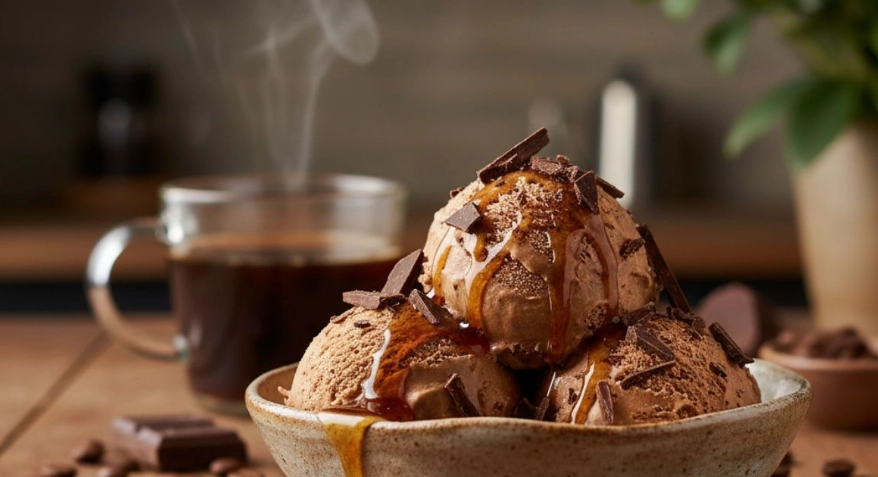
Dark Chocolate Gelato
This is a custard-based gelato (crema), where egg yolks are welcome for their rich texture. The key is using high-quality cocoa powder and dark chocolate for a complex, adult flavor.
Ingredients:
- 400 ml whole milk
- 200 ml heavy cream
- 4 large egg yolks
- 150g caster sugar
- 40g high-quality unsweetened cocoa powder (like Dutch-process)
- 100g dark chocolate (70%), finely chopped
- Pinch of salt
Method:
- Whisk egg yolks and half the sugar (75g) in a bowl until pale and slightly thickened.
- In a saucepan, combine milk, cream, the remaining sugar, cocoa powder, and salt. Heat until steaming, whisking to dissolve the cocoa.
- Slowly pour about a third of the hot milk mixture into the egg yolks, whisking constantly to temper them. Then pour the yolk mixture back into the saucepan.
- Cook over low heat, stirring constantly with a spatula, until the mixture thickens enough to coat the back of the spoon (around 170-175°F / 77-80°C). Do not let it boil.
- Remove from heat, add the chopped dark chocolate, and stir until completely melted and smooth.
- Strain, chill, age, and churn. The result is intensely chocolatey, not just sweet.
The 3 Biggest Mistakes (And How to Dodge Them)
I've made these so you don't have to.
1. Skipping the Pre-Chill. Pouring a warm base into your machine melts the frozen bowl, causing it to churn poorly and never fully freeze. Your base must be stone-cold, straight from the fridge. No exceptions.
2. Over-churning. You want a soft, creamy texture that looks like soft-serve. If you churn until it's solid and difficult to paddle, you've incorporated too much air and it will freeze rock-hard. Stop the machine as soon as it holds its shape on a spoon.
3. Poor Storage. Tossing your churned gelato into a container and slapping on the lid invites ice crystals. Always press a piece of parchment paper or plastic wrap directly onto the exposed surface before sealing. This creates a barrier against freezer air.
Serving & Storing Like a Pro
Transfer your gelato from the freezer to the main compartment of your fridge for 10-15 minutes before you plan to serve it. This brings it up to the ideal, scoopable "gelato temperature." Use a warmed gelato spade or a solid metal spoon dipped in hot water for perfect oval scoops.
For storage, remember the parchment paper trick. In an airtight container, it will keep its best texture for 3-5 days. After that, quality declines. This isn't a bad thing—it means you're eating fresh, real food without industrial preservatives.
Your Gelato Questions, Answered
 The journey to perfect homemade gelato is a few batches long. You'll tweak sugar levels, experiment with flavors (try steeping the milk with a vanilla bean for the Fior di Latte, or blending in some roasted hazelnuts), and find your favorite base. Start with the Fior di Latte. Master that pure texture, and every flavor you make afterwards will be better for it. Now, go pre-chill that bowl.