Quick Navigation
- Why This Recipe of Sauerkraut Works (The Science, Simplified)
- Gathering Your Tools & Ingredients: You Probably Have Most of This
- The Step-by-Step Recipe of Sauerkraut: A Visual Walkthrough
- Troubleshooting Your Recipe of Sauerkraut: Common Issues Solved
- Leveling Up Your Recipe of Sauerkraut: Flavor Variations
- Your Recipe of Sauerkraut Questions, Answered
- From Recipe to Routine: Making Sauerkraut a Kitchen Staple
Let's be honest. The idea of making your own sauerkraut can seem a bit intimidating. You're leaving cabbage out on the counter for weeks? Isn't that just asking for trouble? I thought the same thing. My first attempt years ago was a nervous experiment watched with the suspicion of a bomb squad technician. But here's the truth I discovered: the core recipe of sauerkraut is one of the most forgiving, simple, and rewarding processes in the whole world of cooking.
It's just cabbage and salt. That's it. The magic happens all by itself. This isn't about fancy techniques or expensive gear; it's about understanding a few basic principles and then getting out of nature's way.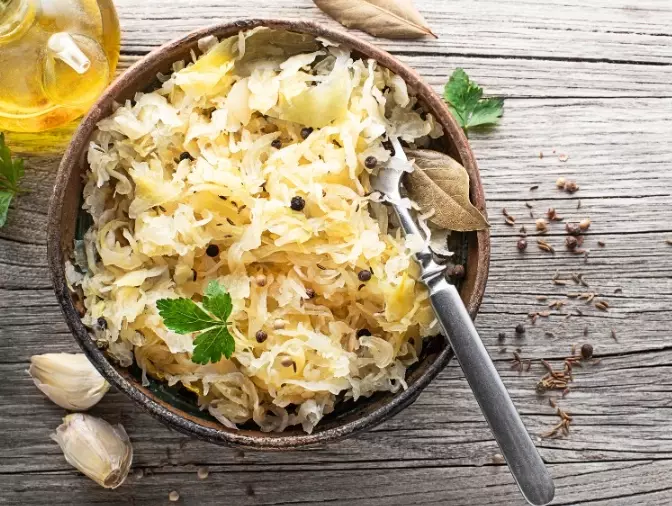
Why bother making it when you can buy a jar at the store? Oh, where to start. The flavor is incomparable—bright, complex, and alive, not the soggy, one-note sourness of pasteurized versions. It's packed with probiotics that are fantastic for your gut health, way more than any pill could provide. And financially, it's a steal. A head of cabbage and some salt turns into a mountain of a superfood for pennies.
This guide is my attempt to give you everything I wish I'd known. We'll walk through the foolproof method, tackle every "what if" question, and I'll even share a couple of my own embarrassing fails so you can avoid them. By the end, you'll see that this ancient recipe of sauerkraut is not just a preservation method, but a little bit of kitchen alchemy anyone can master.
Why This Recipe of Sauerkraut Works (The Science, Simplified)
Before we get our hands dirty, let's quickly demystify what's actually happening in that jar. It helps to know *why* things work, so you're not just following steps blindly.
When you mix shredded cabbage with salt, the salt pulls water out of the cabbage cells through osmosis. This creates the brine, that salty liquid you see. This brine is the key. It creates an environment where harmful bacteria can't easily survive, but it's a welcome mat for the good guys: lactic acid bacteria (LAB). These LAB are already present on the cabbage leaves, waiting for their moment.
As the jar sits at room temperature, these bacteria get to work feasting on the natural sugars in the cabbage. Their main waste product? Lactic acid. This acid is what gives sauerkraut its signature tang and, crucially, acts as a powerful natural preservative. The environment gets more and more acidic, safely preserving the cabbage and making it digestible. The process is called lacto-fermentation, and it's been used for thousands of years to keep vegetables edible through the winter.
So your job isn't to "make" the sauerkraut. Your job is to prepare the cabbage, provide a safe, anaerobic (oxygen-free) environment, and let the microbes do their thing. Every step in the recipe of sauerkraut serves one of these three goals.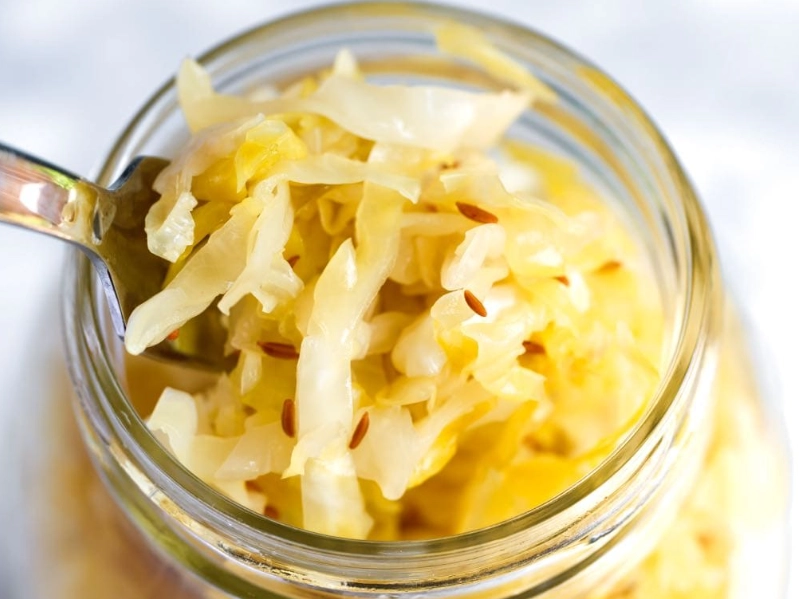
Gathering Your Tools & Ingredients: You Probably Have Most of This
One of the best things about this recipe of sauerkraut is you don't need special equipment. Fancy fermentation crocks are nice, but absolutely not necessary. Let's look at what you actually need.
The Non-Negotiable Ingredients
Cabbage: The star. Green cabbage is the classic, reliable choice. Look for a dense, heavy head. Organic is great if you can, as it likely has a more robust population of wild bacteria, but conventional works perfectly fine. One medium head (about 2-3 lbs) is a perfect starting batch.
Salt: This is critical. You must use a salt without additives. Additives like iodine (in iodized table salt) or anti-caking agents can inhibit fermentation and discolor your kraut.
The ratio is simple, and it's the backbone of every reliable recipe of sauerkraut: 2-3% salt by weight of the cabbage. We'll use 2.5% for a great balance of safety and flavor. This means for every 100 grams of shredded cabbage, you use 2.5 grams of salt. Using a kitchen scale is the single best way to ensure success and consistency. No guesswork.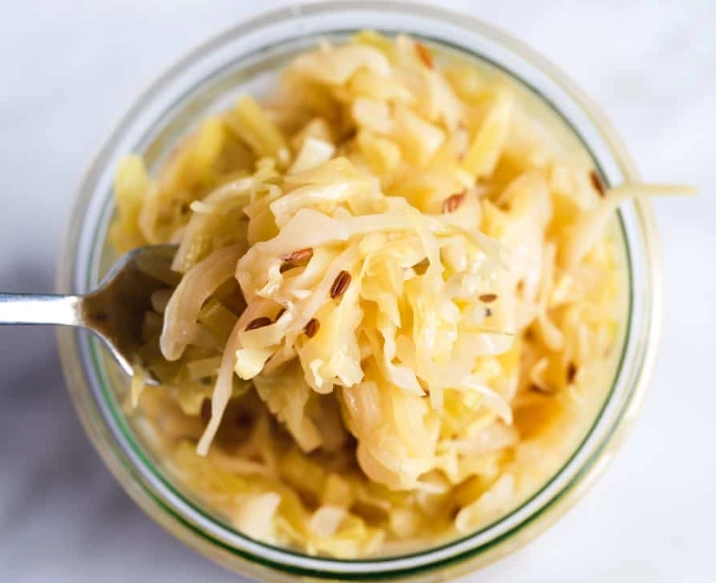
Equipment Checklist
- A Large Bowl: For massaging the cabbage and salt.
- A Sharp Knife or Mandoline/Vegetable Slicer: For shredding the cabbage evenly. Even shreds ferment evenly.
- A Kitchen Scale: Seriously, get one. It makes this foolproof.
- Fermentation Vessel: A clean, wide-mouth glass jar (quart or half-gallon size is perfect). You can also use a food-grade plastic container. I prefer glass so I can see what's happening.
- Weights: To keep the cabbage submerged under the brine. This is VITAL. You can use a smaller jelly jar that fits inside, special glass fermentation weights, or even a zip-top bag filled with a little brine (in case it leaks).
- Cover: Something to let gas out but keep bugs and dust in. A fermentation lid with an airlock is ideal, but a simple piece of cloth secured with a rubber band works just fine for centuries-old method.
The Step-by-Step Recipe of Sauerkraut: A Visual Walkthrough
Alright, let's make some kraut. I'll break this down into phases: Prep, Pack, and Patiently Wait.
Phase 1: Prep & Shred
Remove any damaged or dirty outer leaves from your cabbage. Set one or two of the nicest, largest leaves aside—you'll use these later. Cut the cabbage into quarters and remove the hard core. Then, shred it. You're aiming for shreds about the thickness of a quarter. A mandoline makes this fast and uniform, but a sharp knife and a little patience work great.
Weigh your shredded cabbage. Write down the weight. Calculate 2.5% of that weight—that's how much salt you need. (Example: 800g cabbage x 0.025 = 20g salt).
Put the cabbage and all the salt in your large bowl. Now, get your hands in there. Start massaging and squeezing the cabbage with the salt. It will feel dry at first, but within 3-5 minutes, you'll feel it become wet and limp, and a pool of brine will start forming in the bottom of the bowl. This step is crucial—it's creating the life-giving brine.
Phase 2: Pack & Submerge
Take a handful of the salted, limp cabbage and pack it tightly into your clean jar. Use your fist or a tamper (like the end of a rolling pin) to really press it down hard. You want to eliminate as many air pockets as possible. Add another handful, pack again. Continue until all the cabbage and every drop of brine from the bowl is in the jar.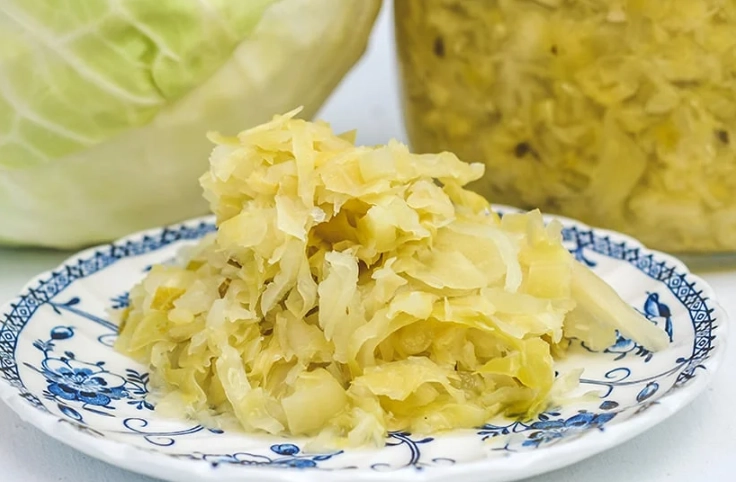
The brine should rise above the level of the packed cabbage. If it doesn't (sometimes drier cabbages need help), you can make a little extra brine by dissolving 1 teaspoon of the same salt in 1 cup of non-chlorinated water and adding just enough to cover.
Now, take that reserved outer cabbage leaf. Crumple it up and press it directly on top of the shredded cabbage. This creates a protective layer. Place your weight on top of this leaf, pressing down until the brine rises over the weight. Everything must be under the brine.
Cover the jar with your chosen method—airlock lid, or cloth and rubber band. Label the jar with the date. This is your official start line.
Phase 3: Ferment & Taste
Place the jar on a plate or tray (to catch any potential overflow—this is normal and called "burping") and put it somewhere out of direct sunlight at a cool room temperature, ideally between 65-72°F (18-22°C).
Now, you wait. But you're not completely hands-off. Check it after 24 hours. Press the weight down again if any cabbage has floated up. You might see tiny bubbles rising—that's a great sign! The LAB are active and producing carbon dioxide.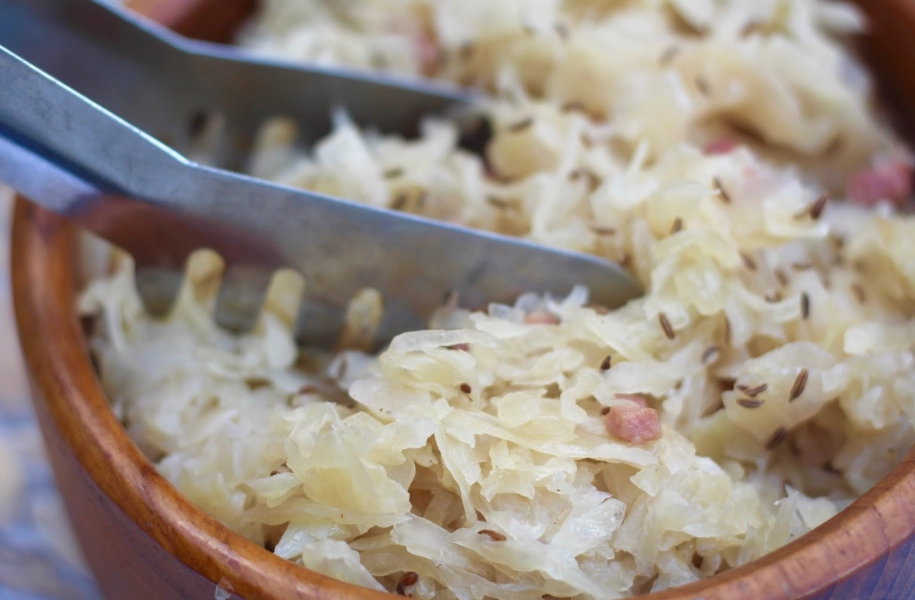
Start tasting it after about 5-7 days. Use a clean fork to get a sample from beneath the weight. What are you looking for? It will progress from salty cabbage, to a mild tang, to a full, sour, kraut flavor. The texture will go from crunchy to a softened, but still pleasant, crunch.
How long is the recipe of sauerkraut finished? That's entirely up to your taste. I like mine at around 2-3 weeks in my kitchen. Some like it milder (1 week), some like it funky and strong (4+ weeks). It's done when you think it's delicious.
Once you're happy, remove the weight, put a regular lid on the jar, and store it in the refrigerator. The cold drastically slows the fermentation, preserving your perfect kraut for months.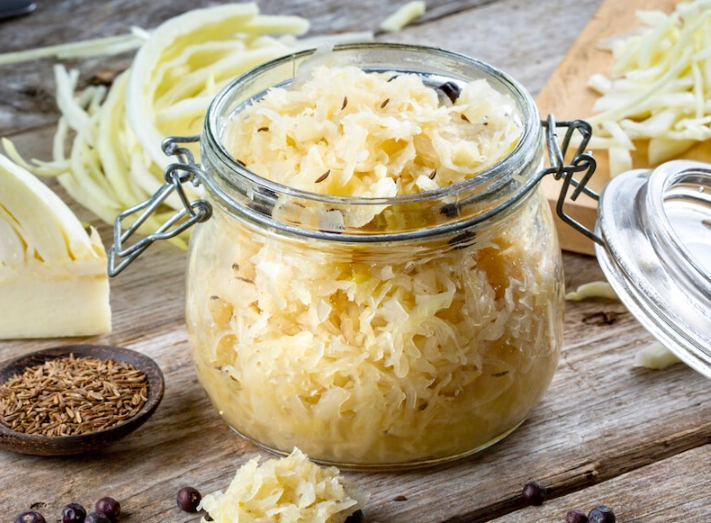
Troubleshooting Your Recipe of Sauerkraut: Common Issues Solved
Things don't always go perfectly. Here’s a quick-reference table for the most common hiccups and what to do.
| What You See | Is It Normal? | What To Do |
|---|---|---|
| Cloudy brine | YES, perfectly normal. This is a sign of healthy bacterial activity and dead cells. It's not spoilage. | Nothing. Carry on. |
| White sediment at bottom | YES, normal. This is accumulated dead lactic acid bacteria. It's sometimes called "lees." | Nothing. You can pour it off when eating if you want, but it's harmless. |
| Bubbles rising | YES, great sign! Fermentation is active and producing CO2. | Enjoy the show. Press down the weight if bubbles push cabbage up. |
| Kahm yeast (white, powdery film on surface) | Mostly harmless. A surface yeast that thrives in acidic, aerobic environments. It can give an off-flavor if left. | Skim it off carefully with a clean spoon. It's not dangerous, but remove it. |
| Color changes (pink, dark) | Usually a sign of exposure to air. Pink can come from certain yeasts. Darkening is often oxidation. | If it's just on top and smells fine, skim off the discolored layer. The kraut underneath is usually okay. Taste test carefully. |
| Mold (fuzzy, blue, green, black) | Potential problem. Fuzzy, colorful mold means oxygen and potentially harmful molds are present. | If it's just a tiny spot: Skim off an inch-thick layer below and around it, check the rest. If it's widespread or the kraut smells foul/rotten: Sadly, it's best to discard the batch. This is rare if everything is submerged. |
The U.S. Department of Agriculture's Complete Guide to Home Canning has excellent, science-based resources on the principles of fermentation safety, which are reassuring to review.
Leveling Up Your Recipe of Sauerkraut: Flavor Variations
Once you've mastered the basic recipe of sauerkraut, the world is your oyster... or your caraway seed. Adding flavors during the initial pack is easy and creates incredible depth.
A few classic add-ins per quart of kraut:
- Caraway or Juniper Berries: The classic German touch. 1-2 tsp of caraway seeds or 5-8 crushed juniper berries.
- Apple & Onion: Add 1 small grated apple and 1/2 a small, thinly sliced onion for a sweeter, more complex kraut.
- Spicy Kraut: Add 1-2 sliced jalapeños or a teaspoon of red pepper flakes.
- Beet & Ginger Kraut: Add 1 small shredded beet and a tablespoon of grated fresh ginger for stunning pink color and a zing.
The rule for add-ins: keep them relatively small or shredded so they integrate well and don't create large air pockets. Add them to the cabbage before you add the salt, so everything gets massaged together.
Your Recipe of Sauerkraut Questions, Answered
For more in-depth scientific questions about the health benefits of fermented foods like sauerkraut, resources like the National Institutes of Health (NIH) often publish review papers on probiotics and gut health that can provide broader context.
From Recipe to Routine: Making Sauerkraut a Kitchen Staple
The real joy of this recipe of sauerkraut isn't in making one perfect batch. It's in realizing you now have a skill. You can preserve a glut of garden cabbage. You can create a custom condiment that's better for you than anything on a shelf.
My routine now is simple: when I see nice cabbages at the market, I buy an extra one. An hour of prep gives me a jar that will sit on my counter, quietly bubbling away, and then feed me for months. It goes on sausages, in salads, alongside grilled cheese, or straight out of the jar as a snack.
The process connects you to a rhythm of food that's older than refrigeration. It teaches patience and observation. And it gives you a product that's vibrant, alive, and genuinely good for you.
So go find a cabbage. Weigh it. Salt it. Squeeze it. Pack it. And watch. That's the whole, beautiful, simple recipe of sauerkraut. You've got this.