Let's be honest. Most homemade pizza attempts end in disappointment. You aim for a crisp, airy, Sicilian-style crust, but you get something closer to focaccia or, worse, a dense bread slab. I've been there. After a decade of testing, burning, and perfecting, I cracked the code. This isn't just a recipe; it's a blueprint for the thick, light, and gloriously crispy-bottomed pan pizza that defines a true Sicilian pizza.
The magic lies in three things most recipes gloss over: the specific flour protein, a higher hydration level than you think you need, and the crucial role of a well-oiled pan. Forget everything you know about thin-crust Neapolitan dough. This is a different beast.
Your Quick Guide to Sicilian Pizza Dough Success
What Makes Sicilian Pizza Dough Different?
It's not just "thick crust." The texture is everything. A proper Sicilian pizza crust, or Sfincione-style dough, has a unique architecture: a crispy, almost fried bottom, a soft and tender interior crumb with irregular holes (the "crumb"), and a slightly chewy crown. This comes from a high-hydration dough that's proofed in a generously oiled sheet pan.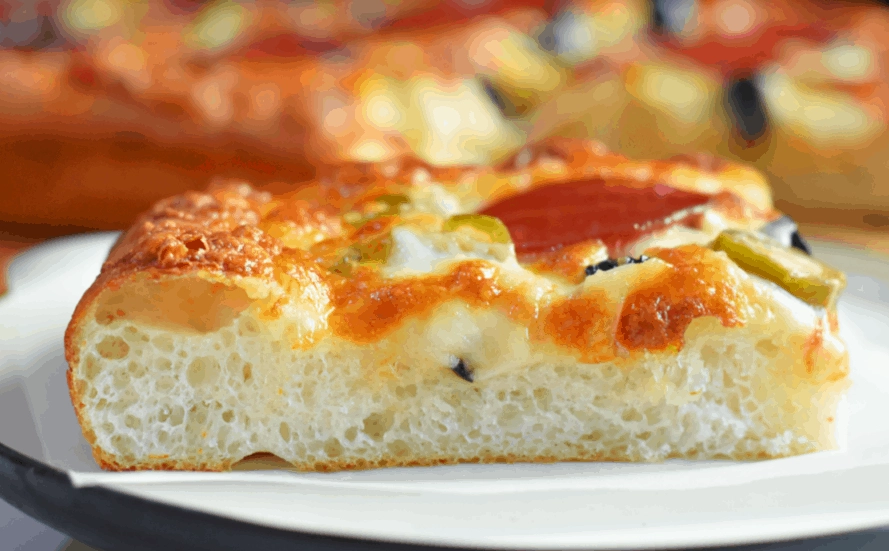
Think of it as a hybrid between a focaccia and a New York-style pizza. The oil in the pan fries the bottom as it bakes, creating that signature crunch. The high water content (hydration) and long, slow fermentation create gases that get trapped, leading to an open, airy interior instead of a uniform, bready texture.
Most recipes fail because they treat it like regular bread dough. They don't use enough water, they over-knead it, or they skimp on the oil in the pan. Get these wrong, and you lose the soul of the dish.
The Ingredients Breakdown: Why Each One Matters
You only need four core ingredients, but their quality and type are non-negotiable.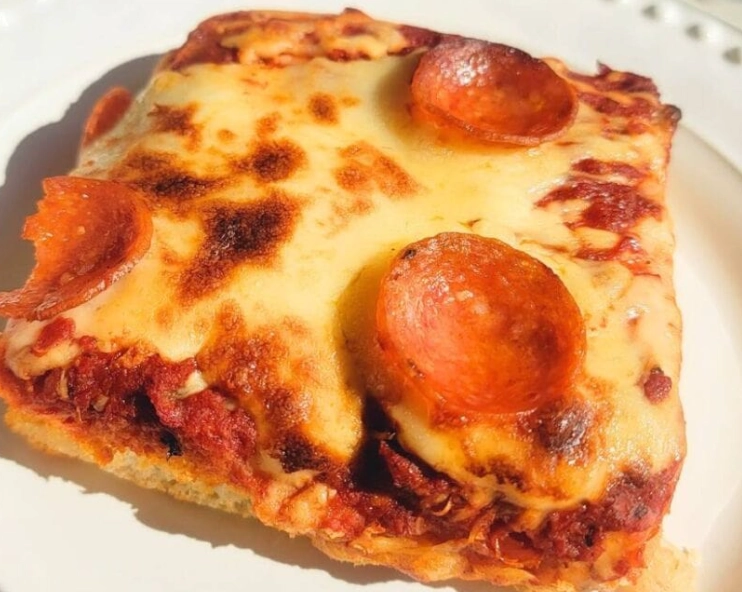
The Non-Negotiable Foundation
Flour: This is your make-or-break ingredient. All-purpose flour will give you a cakey, dense crust. You need high-protein bread flour, ideally around 12.5-13% protein. King Arthur Bread Flour is a reliable, widely available choice. The high protein creates more gluten, which can hold the structure of this wet dough and trap those precious air bubbles. Some professional bakers in Sicily use a specific tipo "00" flour milled for long fermentations, but for home bakers, good bread flour is perfect.
Water: Use lukewarm water, about 95°F (35°C). Too cold and the yeast sleeps; too hot and you kill it. The temperature matters more than people think.
Yeast: Instant yeast is my go-to for reliability. Active dry works too, but you might need to proof it in the water first. For a deeper flavor, you can use a tiny amount and ferment the dough in the fridge for 24-48 hours.
Salt: Fine sea salt. It controls yeast activity and strengthens gluten. Don't add it directly to the yeast.
Olive Oil: Use a good extra virgin olive oil for the pan. A neutral oil like canola works too, but EVOO adds flavor. You'll use more than you're comfortable with—trust the process.
The Step-by-Step Process (No Fancy Equipment Needed)
You don't need a stand mixer. In fact, I prefer mixing by hand for this wet dough so I can feel its development.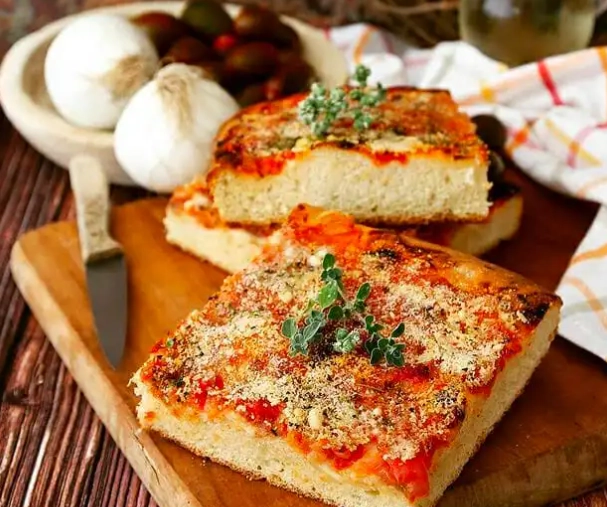
Step 1: The Autolyse (The Secret Weapon)
Mix 500g of bread flour with 350g of lukewarm water (that's 70% hydration) in a large bowl until just combined. No dry spots. Let it sit, covered, for 30 minutes. This autolyse period allows the flour to fully hydrate, starting gluten development naturally. It makes the dough smoother and easier to handle later. You'll see the change.
Step 2: Incorporating Yeast and Salt
Sprinkle 4g of instant yeast and 10g of fine sea salt over the dough. Use wet hands to pinch and fold the dough, incorporating the yeast and salt evenly. This is messy. Embrace it. Fold for about 2-3 minutes until everything is fairly mixed. The dough will be shaggy and very sticky.
Step 3: The Bulk Fermentation & Folds
Cover the bowl. Let it rise at room temperature (around 70°F/21°C) for 2 hours. Here's the expert move: every 30 minutes, perform a series of "stretch and folds." Wet your hands, grab one side of the dough, stretch it up, and fold it over the center. Do this around the bowl 4-5 times. This builds strength without over-kneading. After 2 hours, the dough should be bubbly, jiggly, and nearly doubled.
Step 4: Panning and the Final Proof
Pour 3-4 tablespoons of olive oil into a 9x13 inch or similar sized metal baking pan. Swirl it to coat the bottom and sides generously. Gently scrape your dough into the center of the oiled pan. Using oiled fingers, gently press and dimple the dough, encouraging it to start spreading towards the edges. Don't force it to fill the pan yet. Cover and let it proof for another 60-90 minutes. It should look puffy and relaxed, filling about 80% of the pan.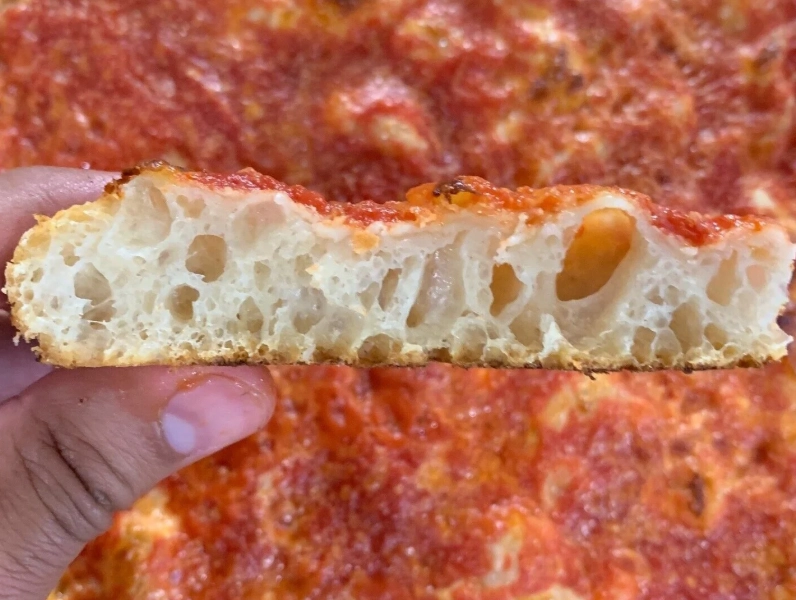
Pro-Tip: If your kitchen is cold, the proof will take longer. If it's warm, it'll be faster. Judge by look and feel, not just the clock. The dough is ready when it holds a dimple after you gently poke it.
How to Shape and Bake Sicilian Pizza Dough
Now for the fun part. Preheat your oven to 450°F (230°C) with a rack in the lower third. A hotter oven is better, but 450°F is safe for most home ovens and pans.
Once the dough is proofed, use oiled fingers to gently stretch and press it into the corners of the pan. Be delicate—you want to preserve those air bubbles. If it resists, let it rest for 5 minutes and try again.
Add your sauce (a simple, thick tomato sauce works best), cheese, and toppings. For authenticity, cheese often goes under the sauce in a classic Sicilian style.
Bake for 18-22 minutes. Look for a deeply golden-brown, crispy bottom (lift a corner with a spatula to check) and bubbly, browned cheese on top.
This is critical: let the pizza rest in the pan for 5 minutes, then use a thin spatula to loosen the edges and slide it onto a wire rack. This stops the bottom from steaming and getting soggy.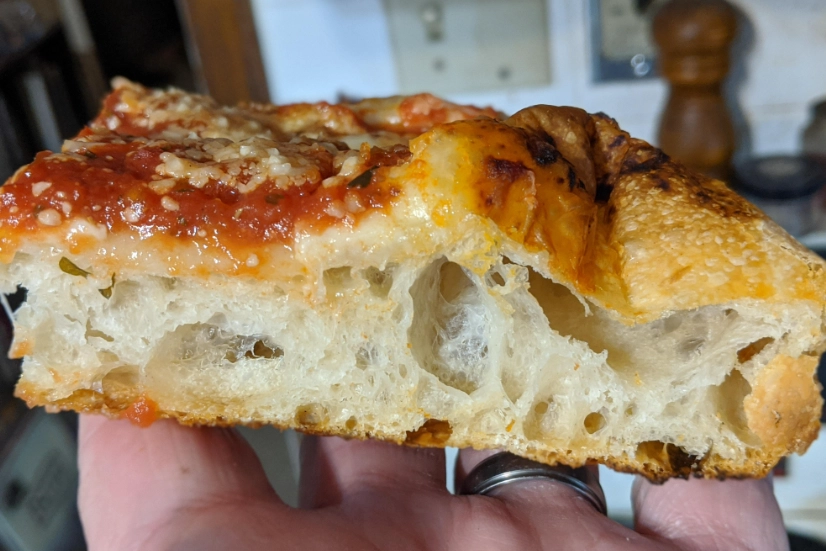
The 3 Most Common Mistakes (And How to Avoid Them)
I've made these so you don't have to.
Mistake 1: Using a glass or ceramic dish. Metal is essential. It gets hot quickly and transfers heat efficiently to create the fried, crispy bottom. A glass pan will give you a pale, soft crust. If you only have glass, crank the oven to 475°F and expect a longer bake time, but the result won't be the same.
Mistake 2: Being scared of a wet dough. A 70% hydration dough feels alarmingly wet when you start. Adding more flour seems like the right move, but it's the road to a dense crust. Trust the process. Wet hands and a little oil are your friends for handling it. The high water content is what vaporizes during baking, creating steam and lift for that airy interior.
Mistake 3: Skipping the rest after baking. You must let the pizza rest on a rack. If you cut it in the pan, the residual heat and moisture will turn your perfect crispy bottom into a sad, steamed sponge in minutes. Five minutes on a rack makes all the difference.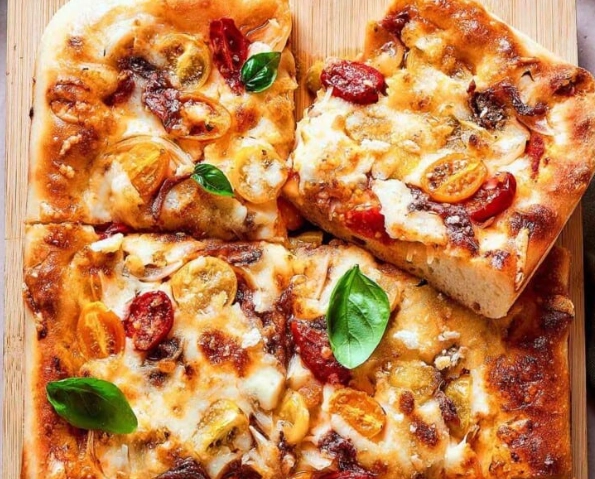
Your Sicilian Pizza Dough Questions, Answered
Can I use all-purpose flour instead of bread flour?
My dough didn't fill the pan during the final proof. Should I stretch it more?
Can I make the Sicilian pizza dough ahead of time and refrigerate it?
Why is my crust bready and dense, not airy?
What's the best sauce for Sicilian pizza?