Let's talk about basbousa. You've probably seen it at Middle Eastern bakeries or family gatherings—a golden, diamond-cut cake swimming in fragrant syrup, often topped with an almond or two. It looks impressive, maybe even a bit intimidating to make. I thought so too, the first time I tried. My early attempts were either too dry or a soggy mess. But after years of tweaking (and a few frank conversations with my Egyptian aunt), I cracked the code. The truth is, a great basbousa recipe is less about fancy techniques and more about understanding a few non-negotiable rules. It's actually one of the easiest desserts you can master.
Your Basbousa Baking Roadmap
What Exactly Is Basbousa (And Why You'll Love It)
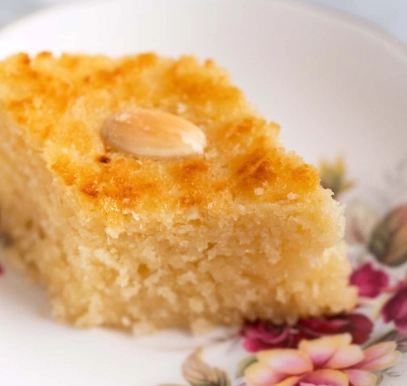
Basbousa is a traditional sweet cake found across the Middle East and North Africa, from Egypt to Lebanon to Turkey (where it's often called revani). Its magic lies in its texture. The base is semolina—a coarse flour made from durum wheat—which gives the cake a unique, slightly granular yet tender crumb that's utterly different from cakes made with regular flour. After baking, it's drenched in a lightly flavored sugar syrup, which it drinks up like a sponge, becoming incredibly moist and sweet without being cloying.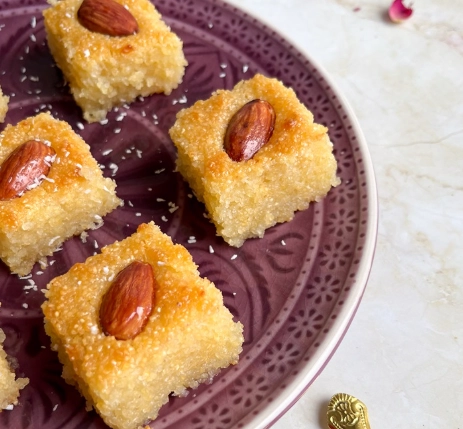
What makes it a favorite for home bakers? It's remarkably forgiving. No need for precise creaming of butter and sugar or worrying about over-mixing. You literally just combine wet and dry ingredients, spread the thick batter in a pan, and bake. The syrup does the heavy lifting in the flavor department. It's the definition of an easy recipe that yields impressive, crowd-pleasing results.
The Basbousa Ingredients: Why Each One Matters
Getting the ingredients right is 80% of the battle. Substituting the wrong thing here can lead to a completely different dessert.
| Ingredient | Role & Best Choice | Common Pitfall to Avoid |
|---|---|---|
| Semolina (Fine/Medium) | The star. Provides structure and signature texture. Use fine or medium grind. Do NOT use coarse semolina for porridge. | Using coarse semolina results in a gritty, unpleasant cake. If you only have coarse, pulse it in a food processor a few times. |
| Plain Yogurt | Adds moisture, tang, and activates the baking soda for rise. Full-fat yogurt gives the richest result. | Using Greek yogurt without adjusting liquid can make the batter too thick and dry. If using Greek, thin it with a tablespoon of milk. |
| Desiccated Coconut | Adds flavor and texture. Unsweetened is standard. Some regional versions omit it. | Sweetened coconut makes the cake overly sweet once syrup is added. Stick to unsweetened. |
| Clarified Butter (Ghee) or Oil | Ghee gives authentic, rich flavor. Neutral oil (like sunflower) works for a lighter version. | Using regular butter can cause burning due to milk solids. If using butter, clarify it first or use oil. |
| Baking Powder & Soda | The leavening duo. Baking soda reacts with yogurt for lift. | Using expired leavening agents is the #1 reason for a dense, flat basbousa. Test them if unsure. |
For the syrup, the simplicity is key: sugar, water, lemon juice (to prevent crystallization), and flavoring. A splash of rose water or orange blossom water is classic. Don't skip the lemon juice—it's what keeps your syrup clear and silky, not grainy.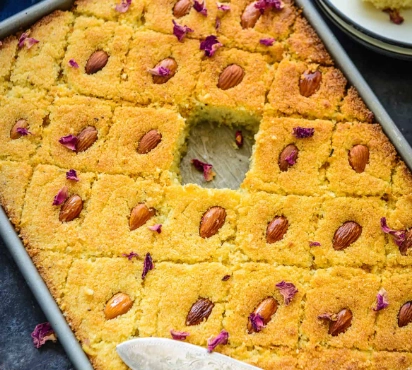
Step-by-Step Basbousa Recipe: From Bowl to Syrup
Here’s the detailed walkthrough. Read through once before you start.
Part 1: Make the Syrup First
This is rule number one. The syrup must be completely cool when it meets the hot cake. If you pour warm syrup on a hot cake, you'll get a mushy top layer. Combine 2 cups sugar, 1.5 cups water, and a tablespoon of lemon juice in a saucepan. Heat until the sugar dissolves, then let it simmer for 10-12 minutes—no need to stir. It should coat the back of a spoon but not reach thread stage. Off the heat, stir in 1-2 teaspoons of rose or orange blossom water. Let it cool completely on the counter. I sometimes make it the day before and fridge it.
Part 2: The Cake Batter (The Easy Part)
Preheat your oven to 350°F (180°C). Grease a 9x13 inch baking pan well. In a large bowl, mix 2.5 cups fine semolina, that secret tablespoon of all-purpose flour, 1 cup unsweetened desiccated coconut, 1 teaspoon baking powder, and 1/2 teaspoon baking soda.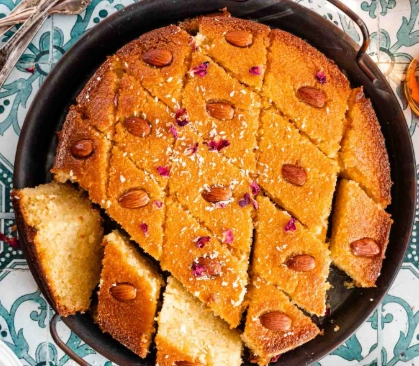
In another bowl, whisk together 1.5 cups plain full-fat yogurt, 1 cup sugar, and 3/4 cup melted ghee or neutral oil. Pour the wet mix into the dry ingredients. Use a spatula to combine. You'll get a very thick, almost paste-like batter. That's perfect. Don't overmix; just make sure no dry spots remain.
Spread the batter evenly in your pan. I use a small offset spatula or the back of a wet spoon to smooth it. Now, take a sharp knife and score the surface into diamonds or squares. Press a blanched almond or pine nut into the center of each piece. This isn't just decorative; it guides your cutting after baking.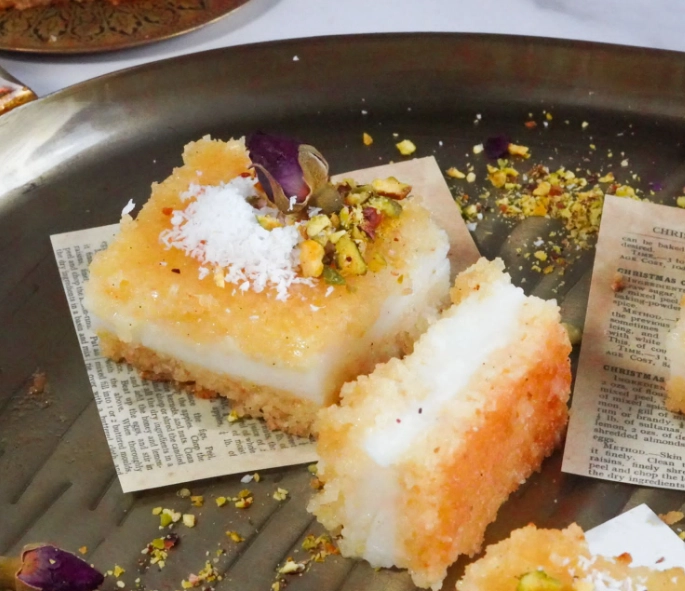
Part 3: Baking & The Syrup Soak
Bake for 30-40 minutes. You're looking for a deep golden brown color all over the top. A toothpick inserted should come out clean. The edges will pull away slightly from the pan.
Here's the critical moment. Take the hot cake out of the oven and place it on a wire rack. Immediately pour the cool syrup all over it. You'll hear a glorious sizzle as the cake starts absorbing it. Let it sit for at least 4 hours, preferably overnight, at room temperature to fully absorb the syrup and develop flavor. Do not cover it while it's warm, or condensation will make the top soggy.
Expert Tips & Tricks They Don't Usually Tell You
Beyond the recipe, these insights come from getting it wrong a few times.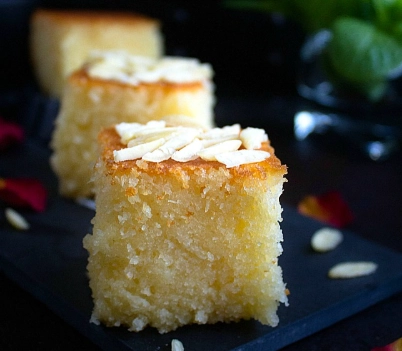
The Yogurt Test: Your yogurt's acidity level directly affects the baking soda's reaction. If your batter doesn't seem to bubble slightly when you mix it, your yogurt might be less acidic. Add an extra teaspoon of lemon juice to the wet ingredients to kickstart the rise.
Syrup Consistency is a Feeling: Don't get bogged down with candy thermometers. Cook the syrup until it has the consistency of thin maple syrup. If it's too thick (like honey), it won't soak in properly. Too thin, and the cake becomes wet. The 10-12 minute simmer is a reliable guide.
Cutting Clean Diamonds: Score the batter before baking, but only cut through fully after the syrup soak. Use the pre-scored lines and your almond markers as a guide. A sharp knife wiped clean between cuts makes all the difference.
The Storage Secret: Basbousa actually gets better after 1-2 days. Store it covered at room temperature. Refrigeration hardens the semolina and ruins the texture. It keeps well for up to 5 days.