Quick Guide to This Recipe
So you want to make a Battenberg cake. That iconic pink and yellow checkerboard, all wrapped up in a neat blanket of marzipan. It looks impressive, maybe a bit daunting, right? I thought so too the first time I saw one. It was in a bakery window, looking perfect and geometric, and I assumed it was some kind of professional pastry chef magic. Turns out, it's not magic at all. With a decent battenberg cake recipe and a bit of patience, you can absolutely make one at home. Honestly, the assembly is more like edible play-doh engineering than advanced patisserie.
This cake has a proper history, you know. It's named after Princess (later Queen) Victoria's granddaughter, Princess Marie of Battenberg, who married Prince Louis of Battenberg. The four squares are supposed to represent the four Battenberg princes. Or at least, that's the popular story. The Great British Bake Off made it famous again, and suddenly everyone wanted to know how to make battenberg cake. But a lot of recipes out there are either too vague or make it sound more complicated than it needs to be.
My goal here is to walk you through the whole thing, step-by-step, with all the little tips and warnings I wish I'd known when I started. We'll cover the classic version, talk about common pitfalls (like dry sponge or marzipan that cracks), and even explore some fun twists. This isn't just a list of instructions; it's the full picture. By the end, you'll have more than just a battenberg cake recipe—you'll have the confidence to nail it.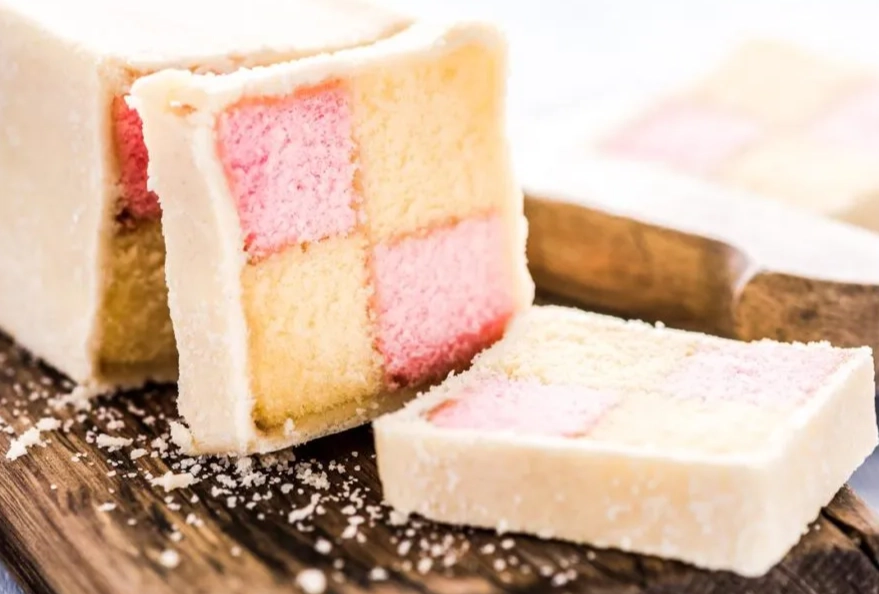
What You Actually Need: The Battenberg Cake Recipe Toolkit
Before you even turn on the oven, let's get our gear sorted. Having the right tools makes this process about 50% easier. You don't need anything wildly specialist, but a few key items are non-negotiable.
First up, the tin. A traditional battenberg cake is baked in a specific Battenberg tin, which is like a square tin with a divider down the middle, creating two long rectangular sections. If you have one, great. If not, don't panic. The most common hack—and the one I use—is to use a regular square tin (7-inch or 8-inch is ideal) and make a divider out of folded aluminium foil. You just need a sturdy wall to keep the two batters separate. A loaf tin can also work in a pinch, but you'll have to trim the cakes more.
Here’s a quick table breaking down the essentials versus the nice-to-haves:
| Tool | Essential or Nice-to-Have? | Why You Need It & Substitutes |
|---|---|---|
| Square Cake Tin (7-8") | Essential | The foundation. A loose-bottomed one is easier for removal. |
| Tin Divider (or heavy-duty foil) | Essential | To separate the pink and yellow batters. Foil, folded multiple times, works perfectly. |
| Digital Kitchen Scales | Highly Recommended | Baking is a science. Volume measures (cups) are less accurate for a consistent sponge. |
| Electric Hand Mixer/Stand Mixer | Highly Recommended | For creaming butter and sugar to the right light, fluffy consistency. |
| Serrated Bread Knife | Essential | The best tool for trimming and cutting your sponge logs neatly. |
| Rolling Pin | Essential | For rolling out the marzipan evenly. |
| Pastry Brush | Essential | For applying the apricot glaze evenly. |
| Cake Turntable | Nice-to-Have | Makes wrapping the cake in marzipan much smoother, but you can manage without. |
| Small Offset Spatula | Nice-to-Have | Great for smoothing the jam and helping with the marzipan finish. |
See? Nothing too crazy. The foil divider trick is a lifesaver and means you don't need to buy a single-use tin. Now, let's talk ingredients. The classic battenberg cake recipe is a simple almond-flavoured sponge. The marzipan is key—it's not just a covering, it's a major flavour component.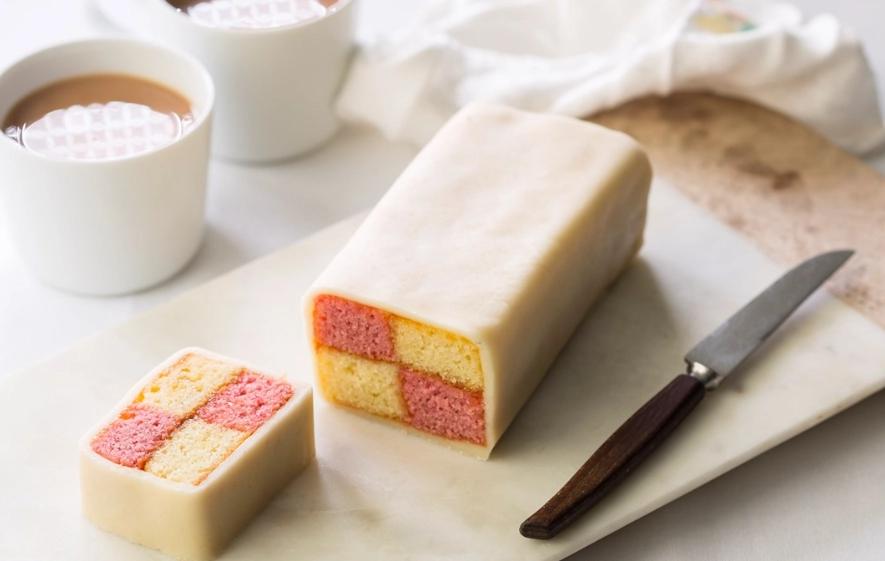
The Core Ingredients List
For the sponge (enough for two coloured sections):
- Unsalted Butter: 175g, softened. This is crucial – if it's too cold, it won't cream properly.
- Caster Sugar: 175g. Fine sugar dissolves more easily into the butter.
- Self-Raising Flour: 175g, sifted. Self-raising has the raising agent built-in, which is traditional. You can use plain/all-purpose flour with baking powder, but the proportions need to be right.
- Eggs: 3 large, at room temperature. Cold eggs can cause the creamed mixture to split.
- Almond Extract: 1 tsp. This gives that distinctive Battenberg flavour. Don't use almond essence—it's synthetic and harsh.
- Pink Food Colouring: Gel or paste is best. Liquid colouring can thin the batter and gives a weaker colour.
- Milk: A tablespoon or two, to loosen the batter if needed.
For the assembly:
- Apricot Jam: About 6-8 tablespoons. You'll need to sieve it or warm it to get it smooth. This acts as the edible glue.
- Marzipan: 500g. This is the standard amount to comfortably cover a 7-8 inch cake. Trust me, trying to stretch 250g is a nightmare.
- Icing Sugar: For dusting the surface when rolling out the marzipan.
The Step-by-Step Battenberg Method: From Batter to Box
Okay, here we go. The actual process. I'm going to break it down into clear phases: Baking, Trimming & Gluing, and The Marzipan Wrap. Read through it all once before you start.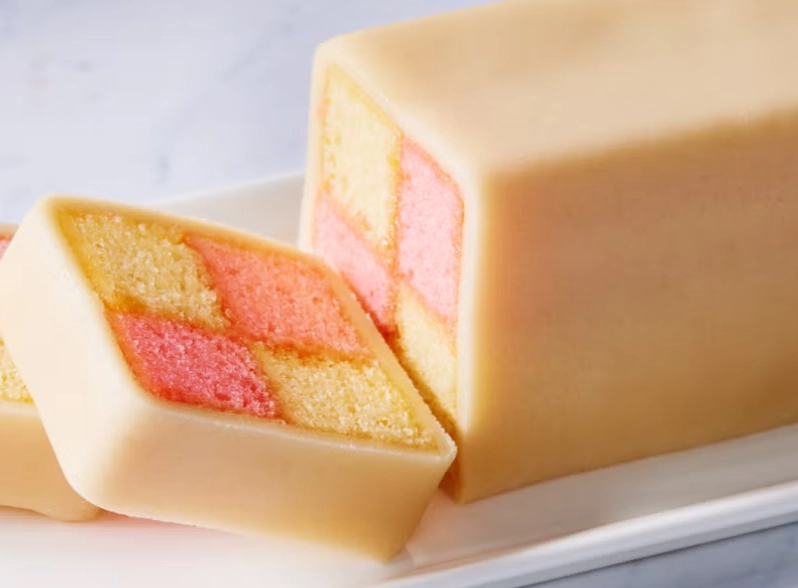
Phase 1: Baking the Perfect Checkerboard Sponge
Preheat your oven to 180°C (160°C fan) / 350°F / Gas Mark 4. Grease your square tin and line it with parchment paper, making sure the paper comes up the sides. Construct your foil divider, making sure it's tall enough and snug against the sides and base of the tin to prevent leaks.
Now, make your batter. The all-in-one method (throwing everything in a bowl) is popular for speed, but for a lighter, more reliable crumb, I swear by the creaming method.
- Cream Butter & Sugar: In a large bowl, beat the softened butter and caster sugar together with an electric mixer until it's very pale, fluffy, and almost white. This can take a good 3-5 minutes. Don't rush this—it incorporates air which helps the cake rise.
- Add Eggs & Almond: Beat the eggs lightly in a jug. Add them to the butter mixture a little at a time, beating well after each addition. If it looks like it might curdle, add a spoonful of your measured flour. Once the eggs are in, beat in the almond extract.
- Fold in Flour: Using a large metal spoon or spatula, gently fold in the sifted self-raising flour until just combined. No white streaks, but don't over-mix or you'll develop gluten and get a tough cake.
- Divide & Colour: Weigh the batter and divide it equally into two separate bowls. Leave one plain—this is your yellow sponge. To the other, add a small amount of pink food colouring (gel is best) and fold it through until you have a uniform, pleasant pink. Not neon, unless that's your thing.
- Bake: Spoon the yellow batter into one side of your prepared tin, and the pink into the other. Smooth the tops. Bake for 25-30 minutes. The cakes are done when they're golden, spring back when lightly pressed, and a skewer inserted comes out clean.
- Cool: Leave in the tin for 10 minutes, then carefully lift out using the parchment paper and transfer to a wire rack to cool completely. This is important—trying to assemble with warm cake is a sticky disaster.
Phase 2: The Great Trim and Stick
This is where the iconic shape comes together. You need two long rectangular prisms of cake, one pink, one yellow, of exactly the same size.
First, trim off any domed tops from your cooled cakes so you have two flat, even rectangles. Now, cut each rectangle in half lengthways, so you end up with four long "logs"—two pink, two yellow. Aim for them to be as identical as possible. A serrated knife and a gentle sawing motion is your friend here.
Now for the glue. Take your apricot jam. If it's full of chunks, you need to smooth it. Either push it through a fine sieve, or warm it gently in a small pan with a splash of water until it becomes a brushable syrup, then let it cool slightly. Brushing on chunky jam will make your assembly lumpy and unstable.
Lay out your four cake logs. Brush apricot jam on one long side of a pink log and stick it to a long side of a yellow log. Do the same with the other pink and yellow logs. Now you have two pink-yellow pairs. Brush the top of one pair with jam, and carefully place the other pair on top, but make sure the colours alternate. So if your bottom pair is Pink-Yellow (from left to right), the top pair should be Yellow-Pink. Press together gently. You should now have a square-checkered long block when viewed from the end.
Take a step back. Admire your checkerboard. This is the satisfying bit.
Phase 3: Conquering the Marzipan Blanket
This is the part that intimidates people. It's really not bad if you're methodical. Dust your work surface liberally with icing sugar. Take your 500g block of marzipan and knead it briefly just to make it pliable.
Roll it out into a rectangle. How big? The rectangle needs to be long enough to wrap all the way around your cake block, and wide enough to cover the top and sides with a little overlap. A good rule: the width should be the length of your cake block plus its height. The length should be the perimeter of the cake (all four sides) plus an inch or so for overlap.
Brush the entire surface of your rolled marzipan with a thin, even layer of the remaining apricot jam. This helps it stick to the cake.
Now, carefully place your cake block at one end of the marzipan rectangle, checkerboard end facing up. Using the parchment paper underneath to help you, roll the cake up in the marzipan, like a sushi roll. Try to get the seam to be on the bottom. Press the seam gently to seal, and also pinch the ends closed and trim off any excess marzipan neatly.
Finally, with the seam side down, gently press and roll the whole cake on the work surface to smooth the marzipan and create a nice, sharp rectangular shape. Traditionally, you press the back of a knife along the top to create a crosshatch pattern and crimp the edges. I sometimes just leave it smooth.
And there you have it. A homemade Battenberg cake.
Beyond the Classic: Variations and Flavour Twists
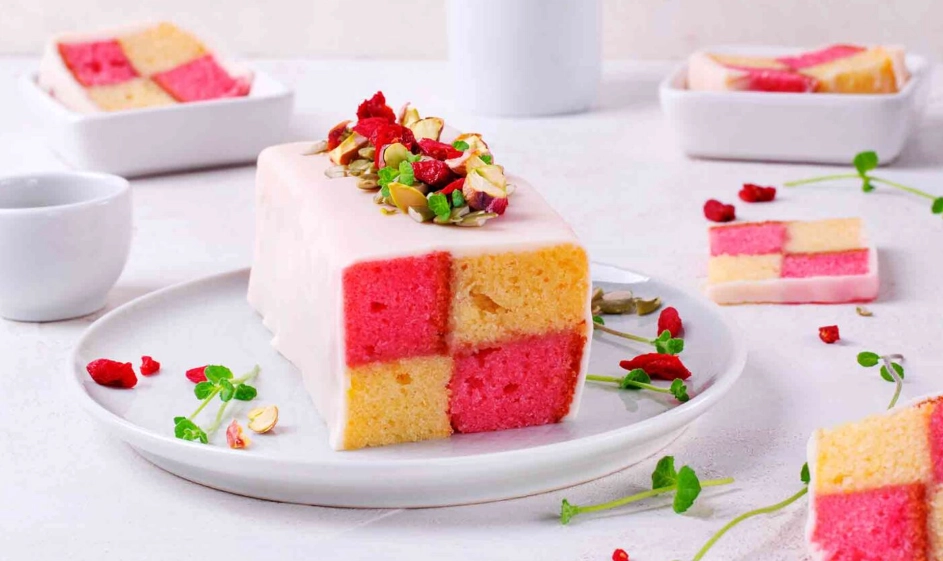
The classic almond and apricot is wonderful, but once you've mastered the technique, why not play around? The basic structure of this battenberg cake recipe is a fantastic canvas. Here are some ideas I've tried (with mixed success, I'll admit).
- Chocolate & Vanilla: Replace the pink sponge with a chocolate one (substitute 25g of the flour with cocoa powder). Use a chocolate spread or ganache instead of apricot jam for sticking. Wrap in chocolate-flavoured marzipan or a simple chocolate plastique.
- Lemon & Blueberry: Add the zest of a lemon to the yellow sponge and use a good blueberry jam. The flavour is fantastic and fresher than the classic.
- Coffee & Walnut: A grown-up version. Add instant espresso powder to one sponge and fold chopped walnuts into both. Use a coffee buttercream to stick them together.
- Gluten-Free: You can directly substitute a good gluten-free self-raising flour blend (like Doves Farm) in the classic battenberg cake recipe. The texture might be slightly more delicate, so handle with care during assembly.
Solving Your Battenberg Problems: A Troubleshooting Guide
Things don't always go to plan. Here are the most common issues and how to fix (or avoid) them.
Digging Deeper: The Story Behind the Cake
It's one thing to follow a battenberg cake recipe, but understanding its place in baking history adds a nice layer (pun intended). As mentioned, its creation is widely linked to the 1884 marriage of Princess Victoria of Hesse and by Rhine to Prince Louis of Battenberg. The four squares were meant to represent the four Battenberg princes: Louis, Alexander, Henry, and Francis Joseph.
It's a quintessential British teatime cake, often found in bakeries and supermarkets. The design is so distinctive it's even protected under EU law (or was, pre-Brexit) as a "protected designation" for a traditional cake from the UK. If you're interested in the formal specifications of traditional foods, you can explore resources from bodies like the British Baking Association (note: this is an illustrative example of an authoritative industry link) which often document the history and standards of classic bakes. The cake's popularity was undeniably supercharged by its appearance as a technical challenge on The Great British Bake Off, sending thousands to search for a reliable battenberg cake recipe.
The combination of almond sponge and marzipan also links it to a broader European tradition of nut-based cakes and pastries, from Italy's panforte to Germany's stollen.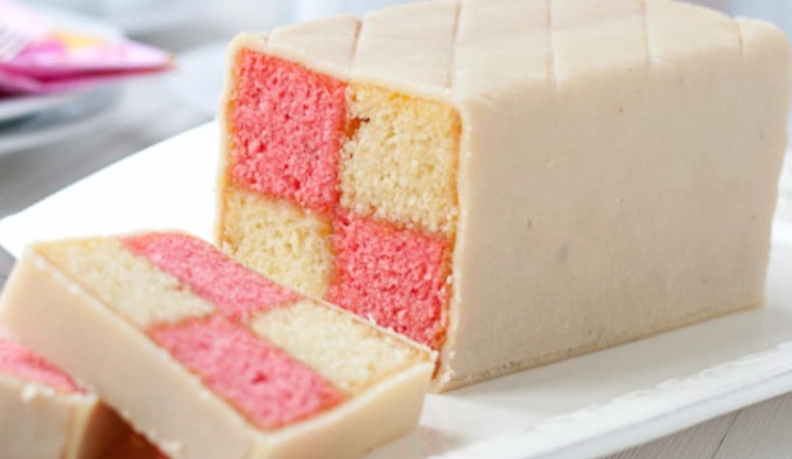
So there you have it.
From a daunting bakery spectacle to something you can confidently make in your own kitchen. This guide aimed to give you more than just a list of steps—it's the context, the fixes, and the encouragement to try. The classic battenberg cake recipe is a fantastic project that teaches precision, patience, and assembly skills. And the result is always a showstopper. Whether you stick with the traditional pink and yellow or venture into your own flavour combinations, the process is deeply satisfying. So preheat that oven, weigh your ingredients, and get ready to create your own little piece of baking history. And when you slice into it and see that perfect checkered pattern? That’s the real reward.