In This Guide
- Why Brisket Is Worth the Effort (And Why It's So Tricky)
- Before You Start: The Non-Negotiables
- Step 1: Selecting Your Brisket
- Step 2: Trimming - The Art of Shaping
- Step 3: The Rub - Keeping It Simple
- Step 4: The Smoke - Wood, Fire, and Patience
- Step 5: The Wrap (a.k.a. The Texas Crutch)
- Step 6: Knowing When It's Done (Forget Time, Trust the Feel)
- Step 7: The Rest - The Secret Ingredient Is Time (Again)
- Step 8: Slicing - Against the Grain, Every Time
- Troubleshooting Your Smoked Beef Brisket Recipe
- Frequently Asked Questions (The Stuff You're Actually Searching)
Let's be honest. Smoking a beef brisket can feel intimidating. You've probably seen those perfect pictures online—deep, dark bark, a perfect pink smoke ring, and meat so tender it practically shreds itself. Then you try it, and... well, let's just say my first attempt could have doubled as a shoe sole. It was tough, dry, and honestly, a bit depressing after all those hours.
But here's the thing. A truly great smoked beef brisket recipe isn't about magic. It's about understanding a few non-negotiable principles and then having the patience to see them through. I've ruined my share of briskets to learn this. The good news? Once it clicks, it's one of the most rewarding things you can make. This guide is everything I wish I'd known when I started.
We're going to walk through this whole process, step-by-step, without any fluff. From picking the right piece of meat at the store to knowing exactly when it's done (this is where most people panic), consider this your personal roadmap.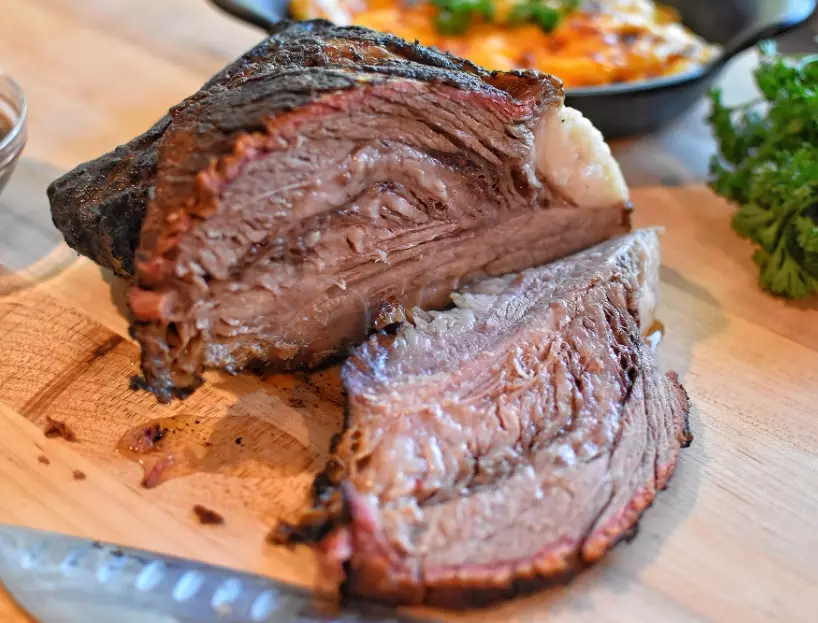
Why Brisket Is Worth the Effort (And Why It's So Tricky)
Brisket comes from the chest of the cow. It's a muscle that works hard, which means it's packed with connective tissue (collagen) and fat. If you cook it fast and hot like a steak, you'll be chewing forever. The goal of our smoked beef brisket recipe is to apply low, slow heat over many hours. This gently melts that tough collagen into gelatin, bastes the meat from the inside with its own fat, and transforms a tough cut into something unbelievably succulent.
The challenge? That fat and connective tissue are uneven. The brisket has two main muscles: the flat (leaner, thinner) and the point (fattier, thicker). They cook at different rates. Your mission is to get them both to perfection at the same time. Sounds fun, right? Don't worry, we'll tackle it.
Before You Start: The Non-Negotiables
You can't rush this. A typical packer brisket (that's the whole thing, flat and point together) will take anywhere from 12 to 18 hours, sometimes more. Clear your day. This is a project.
You also need the right gear. A good smoker that can hold a steady temperature between 225°F and 250°F (107°C - 121°C) is key. I use a charcoal offset smoker because I love the flavor, but a pellet grill or even a dedicated electric smoker can work wonders with less babysitting. A good instant-read thermometer is your best friend—don't even think about guessing. A wireless probe thermometer that lets you monitor the meat temp from your phone is a game-changer for overnight cooks.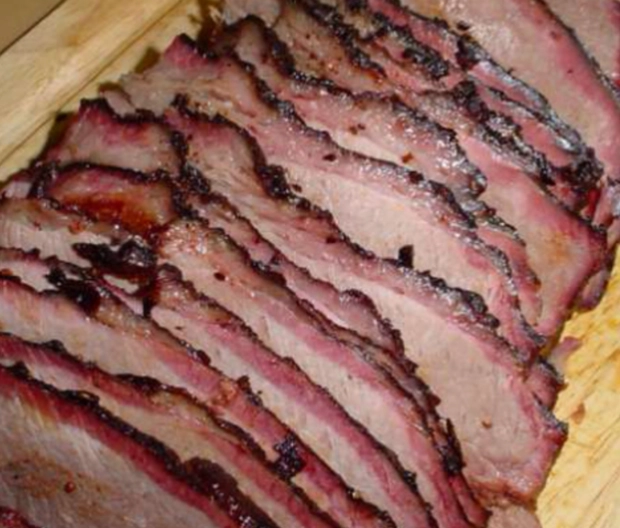
Step 1: Selecting Your Brisket
This might be the most important step. A bad piece of meat won't become great, no matter how good your technique is.
Look for a packer brisket or whole brisket. It should have the flat and point intact, with a thick, hard fat cap on one side. Don't buy just the flat—it's too easy to dry out.
What about grading? USDA Prime is the gold standard, marbled with beautiful fat veins. It's forgiving and luxurious. Choice grade is what most of us find easily, and it makes fantastic brisket—you just need to be a bit more careful. Select grade is very lean. I'd avoid it for smoking unless you're on a tight budget and ready for a challenge.
Size matters. Aim for 12-14 pounds before trimming. Smaller briskets (under 10 lbs) tend to be just the flat, and larger ones (over 16 lbs) can be harder to cook evenly. Give the brisket a bend test in the store (if the butcher allows). A more flexible brisket often indicates better marbling.
Step 2: Trimming - The Art of Shaping
I used to hate this part. Now I see it as sculpting. You're removing the hard, useless fat so smoke and seasoning can penetrate, and shaping the brisket for even cooking.
Take a very sharp boning or fillet knife. Your goal is to leave about 1/4 inch of fat on the fat cap. Any thicker and it won't render; any thinner and the meat might dry out. Slice off the hard, thick fat on the sides and bottom. Round off any sharp corners or thin edges—these will burn to a crisp long before the center is done. There's a large, hard lump of fat between the point and the flat. You don't need to remove it all, but carve out a good portion of it to create a more uniform thickness.
Expect to trim off 2-3 pounds of fat. It feels wasteful, but it's necessary. A well-trimmed brisket is the first secret to a great smoked brisket recipe.
Step 3: The Rub - Keeping It Simple
Here's where people get fancy. I'm going to suggest the opposite. For your first few briskets, use a simple 50/50 mix by volume of coarse kosher salt and coarse ground black pepper. In Texas, this is known as the "Dalmatian rub," and it's iconic for a reason. The pepper forms the base of your bark, and the salt seasons the meat deeply.
Apply it liberally on all sides—and I mean liberally. It should look like a heavy crust. Don't be shy. The meat is thick, and a lot will fall off during handling and smoking anyway. You can add garlic powder, onion powder, or a bit of chili powder if you want, but salt and pepper alone create a pure, beefy flavor that's hard to beat.
Some folks apply a binder (mustard, hot sauce, olive oil) first to help the rub stick. It works, but I've found that on a cold, tacky brisket, the rub sticks just fine without it. Do what feels right.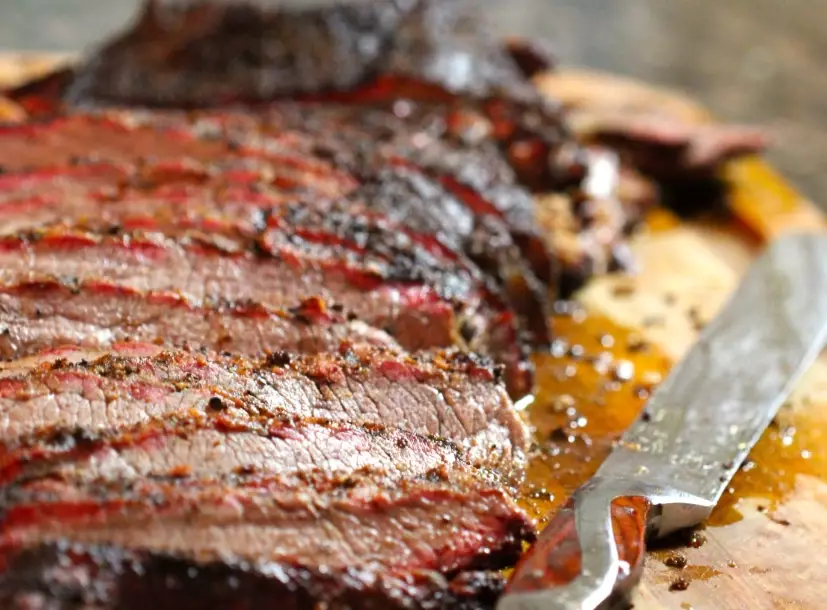
Step 4: The Smoke - Wood, Fire, and Patience
Get your smoker stable at 250°F (121°C). I find 250°F gives a slightly shorter cook time than the classic 225°F without sacrificing quality. Which wood? It's personal.
| Wood Type | Flavor Profile | Best For | My Notes |
|---|---|---|---|
| Post Oak | Medium smoke, slightly sweet, classic | The Texas standard. Perfect for beef. | My go-to. It's balanced and never overpowering. |
| Hickory | Strong, bacon-like, pungent | Bold, traditional BBQ flavor. | Can be bitter if overused. I often mix it with oak. |
| Pecan | Sweet, nutty, milder than hickory | A sweeter, more delicate beef flavor. | Great for poultry too. Less intense, very pleasant. |
| Mesquite | Very strong, earthy, can be bitter | Short, hot cooks (like steaks). | I avoid it for long brisket smokes. It's too easy to make the meat taste like an ashtray. |
| Cherry/Apple | Fruity, sweet, mild | Pork, poultry. Can be mixed with oak for beef. | I'll sometimes add a chunk or two for a hint of sweetness, but not as the primary wood. |
Place the brisket on the smoker, fat cap up (this is debated, but I believe the melting fat baste the meat better this way). If your heat source is directly underneath, position the brisket so the thicker point is closer to the heat. Insert a probe thermometer into the thickest part of the flat, avoiding the fat seam.
Now, close the lid. The hardest part begins: do not open it for at least 3-4 hours. You're letting the smoke do its work and building the bark. If you're lookin', you ain't cookin'.
The Stall: The Great Brisket Test
Somewhere around 150°F to 170°F internal temperature, the brisket will seem to stop cooking. The temperature might sit there for hours. This is the "stall," caused by evaporative cooling as moisture leaves the meat. It's perfectly normal. Don't freak out and crank the heat. This is a crucial phase where the connective tissue is breaking down. Let it ride.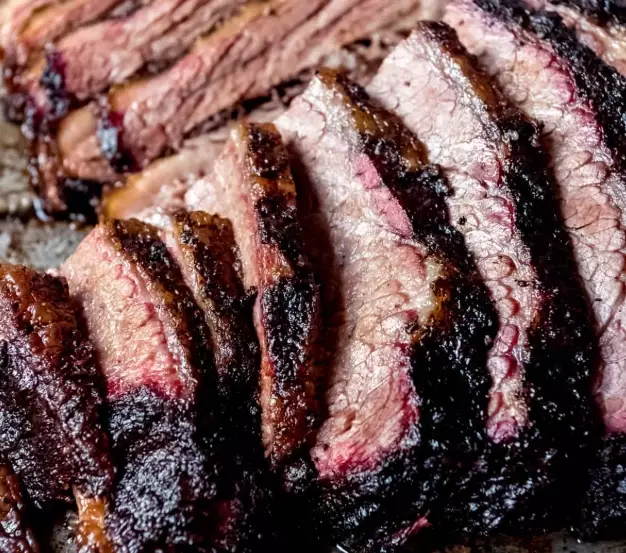
Step 5: The Wrap (a.k.a. The Texas Crutch)
Once the brisket has a deep, mahogany-colored bark you're happy with (usually after 6-8 hours, and the internal temp is around 165-175°F), you have a choice: wrap or not wrap?
Wrapping in butcher paper (preferably pink/peach butcher paper) or aluminum foil accelerates the cook through the stall and keeps the brisket moist. Butcher paper is my favorite—it "breathes" a bit, so the bark stays firmer than with foil, which can make it soggy. Foil (often called a "foil boat" where you just wrap the bottom) steams the meat more, making it incredibly juicy but potentially at the expense of bark texture.
I wrap with butcher paper when the bark is set. It saves time and adds a safety net against drying out. Purists will say never wrap. For a home cook following a smoked beef brisket recipe, I think wrapping is a smart tool. Place the brisket in the center of a large sheet of paper, fold the sides up, and roll it into a tight parcel.
Return it to the smoker, probe and all.
Step 6: Knowing When It's Done (Forget Time, Trust the Feel)
This is the million-dollar question. Your brisket is done not at a specific temperature, but when it's probe-tender.
Start checking when the internal temperature of the flat reaches around 200°F (93°C). Take your instant-read thermometer probe and poke it into the thickest part of the flat. It should slide in with little to no resistance, like pushing into room-temperature butter. If it feels tight or rubbery, it's not ready. Close the lid and check every 30-45 minutes. The final temp might be anywhere from 200°F to 210°F (93°C - 99°C).
Step 7: The Rest - The Secret Ingredient Is Time (Again)
You cannot skip this. A long rest allows the juices, which have been forced to the center of the meat by the heat, to redistribute evenly throughout. If you slice it hot, all those juices will flood your cutting board, leaving the meat dry.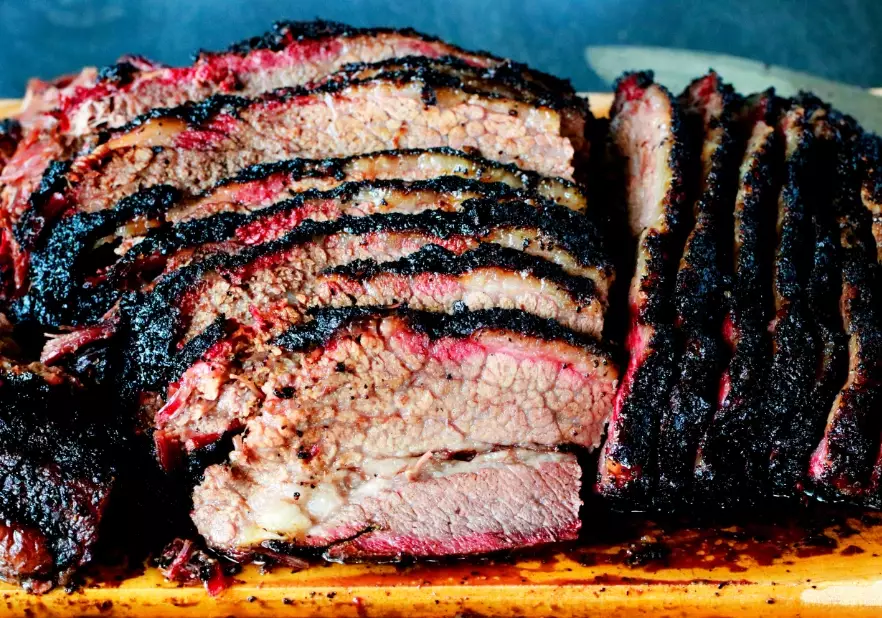
Take the wrapped brisket off the smoker. You have two great options:
- Cooler Rest: Wrap the brisket (still in its paper) in an old towel and place it in an empty, pre-warmed cooler (just pour hot water in and dump it out). Close the lid. It will stay piping hot for 4-6 hours easily. This is ideal.
- Oven Rest: Place the wrapped brisket in your oven (turned off). The insulated box will hold heat well for a multi-hour rest.
Aim for a minimum of 2 hours of rest. I prefer 4-6 hours. Yes, really. It makes a massive difference. A study from the Meat Science Section at Texas A&M University highlights the importance of rest time for moisture retention in large cuts of meat. This isn't just folklore; it's food science.
Step 8: Slicing - Against the Grain, Every Time
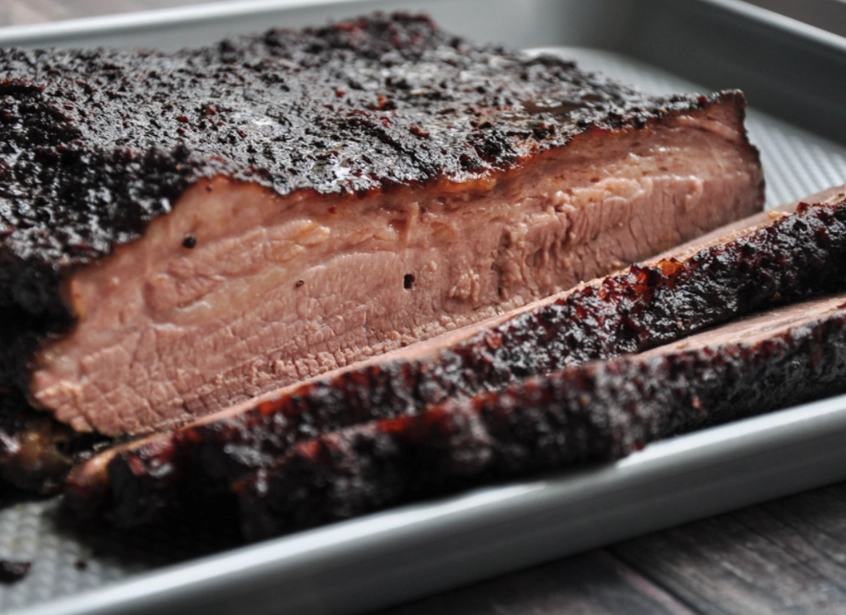
Unwrap your masterpiece. You'll see the two muscles clearly now. Separate the point from the flat by finding the fat seam between them and slicing through it.
For the Flat: The grain runs one way. Slice it perpendicular (across) the grain into pencil-width slices, about 1/4 inch thick. Slicing against the grain shortens the muscle fibers, making each bite tender.
For the Point: This is fattier and can be used for burnt ends (cubes of brisket tossed in sauce and smoked again) or sliced. To slice the point, first rotate it 90 degrees—the grain runs differently than the flat. Then slice it across the grain.
Serve immediately. That's it. You've done it.
Troubleshooting Your Smoked Beef Brisket Recipe
Things don't always go perfectly. Here's a quick fix-it guide:
- Dry Brisket: Likely undercooked (the collagen didn't fully render) or sliced too soon. Next time, wait for true probe-tender feel and rest longer.
- Tough Bark: You probably didn't wrap, or wrapped too late. The bark can over-harden. Wrapping protects it. Also, spritzing with water, apple cider vinegar, or apple juice every hour after the first 3-4 hours can help keep the surface moist for bark formation without hardening.
- No Smoke Ring/Flavor: The smoke ring is cosmetic (a chemical reaction between myoglobin and gases). The flavor comes from the first few hours of smoke. If it tastes bland, ensure you have clean, thin blue smoke coming from your smoker, not thick white billowy smoke (which tastes bitter).
- Greasy or Gummy Fat Cap: The fat didn't render. You likely left the cap too thick (over 1/4 inch) or didn't cook to a high enough internal temperature to melt it.
Frequently Asked Questions (The Stuff You're Actually Searching)
Can I use an electric or pellet grill for this smoked beef brisket recipe?
Absolutely. In fact, they make temperature control a breeze. You might get a slightly less pronounced smoke flavor than with a stick burner, but the convenience is huge. Use a strong hardwood pellet like hickory or mesquite blend to compensate. The cooking process is identical.
Do I need to inject the brisket?
No. A well-cooked brisket is juicy from its own fat and collagen. Injection (using a beef broth/seasoning mix) is an extra step some competition cooks use for a guaranteed moisture boost, especially in the lean flat. For home, it's not necessary. Focus on nailing the cook first.
What's the best way to store and reheat leftover brisket?
Leftovers? A rarity! Slice only what you'll eat. Store large, unsliced chunks wrapped in butcher paper and then in a plastic bag in the fridge for up to 4 days. For longer storage, vacuum seal and freeze. To reheat, never use a microwave—it turns it to rubber. Use a steamer, a covered pan with a bit of broth on low heat, or reheat gently in a 250°F oven, wrapped, until warm.
Is the pink smoke ring safe to eat?
Yes! It's not undercooked meat. It's a harmless reaction between the meat's myoglobin and nitric oxide/carbon monoxide in the smoke. It's a badge of honor in the BBQ world. The USDA safe cooking temperature for beef is 145°F (63°C) with a 3-minute rest, but for brisket, we go much higher to break down connective tissue. The pink ring is purely cosmetic and safe. You can find more on safe meat temperatures from the USDA Food Safety and Inspection Service.
My brisket finished at 3 AM! What do I do?
Welcome to the club. This is why the long cooler rest is a lifesaver. A brisket that finishes at 3 AM, wrapped in a towel and placed in a good cooler, will still be hot and perfect to slice for lunch at noon. The rest only improves it.
The real secret to this smoked beef brisket recipe isn't in the ingredients or the smoker. It's in managing your own expectations and patience. You're not just cooking meat; you're guiding a transformation that happens on its own schedule. Trust the process, learn from each cook, and most importantly, share the results. Even the less-than-perfect ones make great tacos.
So there you have it. No magic, just method. It takes practice. My third brisket was lightyears better than my first. Your first might be great! Grab a brisket this weekend, take your time, and see what happens. The smell alone is worth it. And when you pull apart that perfectly tender slice? There's nothing quite like it.