Quick Navigation
Let's be honest. We've all been there. You spend good money on a beautiful, thick ribeye steak, full of anticipation for a restaurant-quality meal at home. You follow some recipe you found online, and the result is... okay. Maybe it's a bit overdone, or the seasoning is bland, or that gorgeous crust just didn't happen. It's edible, but it's not the "wow" moment you were hoping for. I know because I've ruined my fair share of steaks trying to get it right. The frustration is real.
But here's the thing. Cooking a perfect ribeye steak isn't about having chef-level skills or a $500 grill. It's about understanding a few simple, non-negotiable principles. Once you get those down, you can consistently turn out a juicy, flavorful, perfectly cooked ribeye that will make you question why you ever go out for steak. This guide is the culmination of years of trial, error, and finally, success. It's the ribeye recipe playbook I wish I'd had from the start.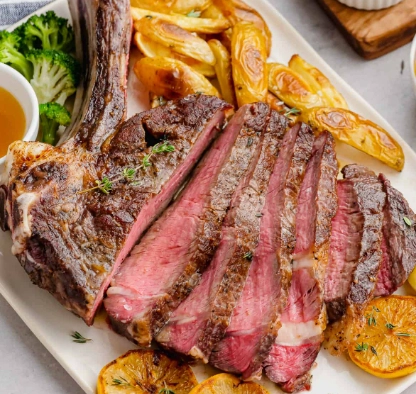
Before we dive into the step-by-step, let's get one myth out of the way: there is no single "best" ribeye recipe. The best method depends on your tools (pan, oven, grill) and your desired outcome. This guide will cover them all, so you can choose your own adventure.
What Makes a Ribeye So Special Anyway?
You don't need me to tell you a ribeye is delicious. But knowing why helps you cook it better. The ribeye comes from the rib section of the cow, specifically ribs six through twelve. This is a lightly worked muscle, which means the meat itself is already incredibly tender. But the real magic is the fat.
Not just any fat. We're talking about intramuscular fat, the beautiful white streaks running through the red meat known as marbling. When you cook a ribeye, that fat slowly renders, basting the meat from the inside out. This self-basting action is what creates that unparalleled juiciness and rich, beefy flavor that other cuts struggle to match. A filet mignon is tender but lean. A New York strip has flavor but less fat. The ribeye? It's the glorious best of both worlds.
That's also why it can be forgiving. A little extra marbling can save a slightly overdone steak from being totally dry. But why leave it to chance? Let's make sure it's perfect.
Choosing Your Champion: Picking the Right Ribeye
You can't make a great ribeye recipe with a subpar steak. This is the most important step, and it happens at the store or butcher counter. Here’s what to look for, in order of importance:
- Thickness: This is non-negotiable for a proper sear. Aim for at least 1.5 inches thick. I prefer 1.75 to 2 inches. Thin steaks (under 1 inch) cook too fast in the center before you can get a good crust, leading you straight to well-done territory. A thick cut gives you a wide window for that perfect medium-rare center.
- Marbling: Look for fine, evenly distributed white streaks throughout the meat. More marbling generally means more flavor and juiciness. Don't be scared of fat caps either; you can trim them later if you want, but they add flavor during cooking.
- Color: The meat should be a bright, cherry red. Avoid steaks that look brownish or have dark spots. The fat should be creamy white, not yellow.
- Grade: In the US, you'll see Prime, Choice, and Select. Prime has the most marbling and is often found in high-end steakhouses. Choice is excellent for home cooking and widely available. Select is leaner and less forgiving. For a special meal, spring for Prime or a well-marbled Choice.
- Bone-In vs. Boneless: This is a matter of preference. The bone-in ribeye (sometimes called a "cowboy ribeye") has its fans who swear the bone adds flavor during cooking. I've done side-by-side tests, and while the difference is subtle, the bone can act as a slight insulator, potentially leading to a slightly less evenly cooked steak next to the bone. Boneless is easier to cook evenly and eat. You really can't go wrong.
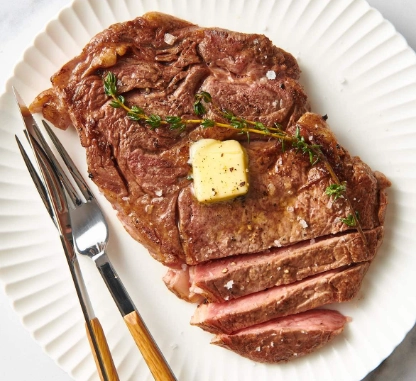
I made the mistake for years of buying the thin, pre-packaged steaks on sale. The difference when I finally invested in a thick, well-marbled cut from a real butcher was night and day. It’s worth the extra few dollars.
The Pre-Game: Preparing Your Steak
You've got your beautiful steak. Now, the crucial steps before it even touches heat. Skipping these is like trying to bake a cake with cold butter and eggs straight from the fridge—it just won't work right.
1. Pat it Dry. Really Dry. This might be the single most overlooked step in any ribeye steak recipe. Take several paper towels and press them firmly against all surfaces of the steak. Soak up every bit of surface moisture you can. Why? Water is the enemy of searing. Instead of the Maillard reaction (those complex, delicious browned flavors) happening immediately, the heat will spend energy evaporating the water, leading to a steamed, gray exterior. A dry surface = an instant, glorious crust.
2. To Salt Early, or Just Before? There's a debate here. Salting just before cooking is fine. But if you have time—and I mean 40 minutes to a few hours—salt it early. Generously season all sides with kosher salt (not table salt; it's too fine) and place it on a wire rack over a plate in the fridge. The salt will initially draw out some moisture, but then, through osmosis, it will be re-absorbed deep into the meat, seasoning it from the inside out and helping the surface dry even further. This is called "dry-brining," and it's a game-changer for flavor and crust.
3. Bring it to Room Temperature? Kinda. The old rule says let it sit out for an hour. The science says a 1.5-inch steak will only warm up about 10 degrees in that hour. It's not useless—it helps promote more even cooking—but don't stress if you only have 30 minutes. Just don't cook it ice-cold from the fridge.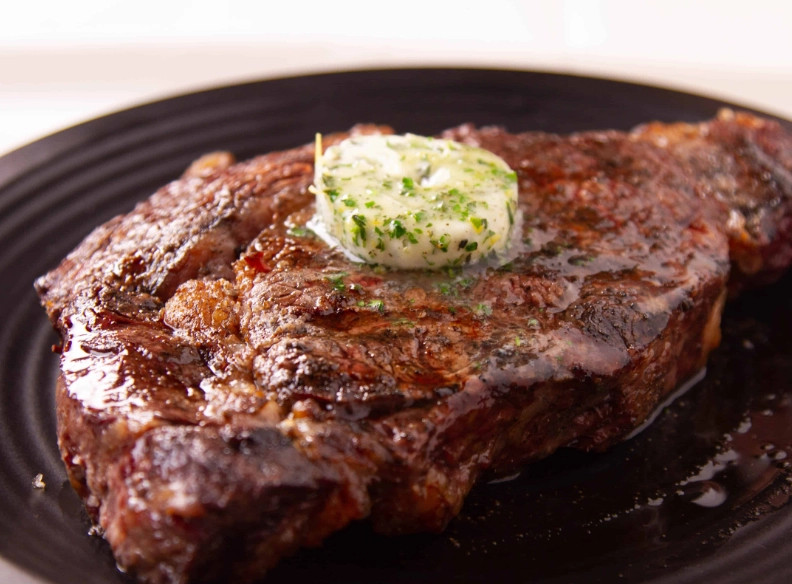
4. Pepper Now or Later? I add coarse ground black pepper just before cooking. If you put pepper on early and then sear at high heat, it can burn and turn bitter. Add it with the salt if you're dry-brining, or right as the steak goes into the pan/on the grill.
Your Ribeye Recipe Toolkit: Choosing a Cooking Method
Here’s where we get into the core of the ribeye recipe. Each method has its merits. I'll give you the details for each, but my personal favorite for ultimate crust and control is the pan-sear.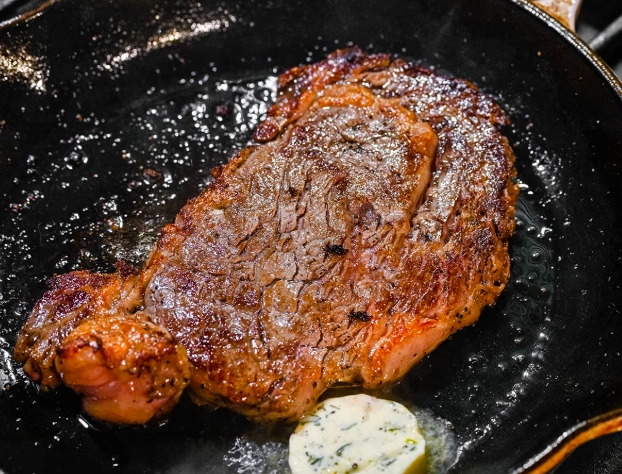
Method 1: The Pan-Seared Ribeye (My Go-To)
This is the classic restaurant method. High heat, a good heavy skillet, and butter. It creates an incredible crust and allows for easy butter basting with aromatics.
What you need: A heavy-bottomed skillet (cast iron or thick stainless steel is perfect), high-smoke-point oil (avocado, grapeseed, or refined safflower), butter, fresh garlic cloves, and fresh herbs like rosemary or thyme.
- Take your prepared, dry, room-temp steak. Season generously with salt and pepper.
- Get your skillet screaming hot over medium-high to high heat. Add enough oil to lightly coat the bottom. It should shimmer and almost smoke.
- Carefully place the steak in the pan. It should sizzle aggressively. Don't touch it! Let it sear undisturbed for 2-3 minutes to build that crust.
- Flip it using tongs. Sear the other side for another 2-3 minutes.
- Now, reduce the heat to medium. Add a few tablespoons of butter, 2-3 crushed garlic cloves, and a sprig or two of herbs to the pan.
- As the butter melts, tilt the pan slightly and, using a spoon, continuously baste the top of the steak with the hot, fragrant butter. Do this for 1-2 minutes per side. This cooks the edges, infuses flavor, and gives the steak a gorgeous finish.
- How do you know when it's done? Use a meat thermometer. It’s the only foolproof way. See the table below for temperatures.
- Transfer the steak to a cutting board or warm plate. Let it rest. Pour the leftover garlic-herb butter from the pan over the top before serving. Divine.
Method 2: The Reverse Sear (For Perfect Evenness)
This technique has become incredibly popular for a reason. It flips the script: you cook the steak low and slow in the oven first, then finish it with a quick, hard sear. The result is edge-to-edge perfect doneness with no gray band, and an amazing crust. It's fantastic for very thick cuts (2 inches or more).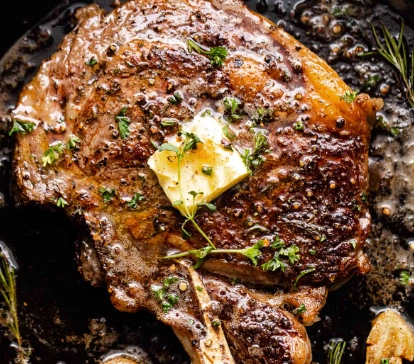
- Preheat your oven to a low temperature, between 250°F and 275°F (120°C - 135°C).
- Season your steak and place it on a wire rack set over a baking sheet.
- Cook in the oven until the internal temperature is about 10-15°F below your desired final temp (e.g., 110°F for medium-rare). This can take 30-60 minutes depending on thickness. Use that thermometer!
- Take the steak out. Now, get a cast iron or heavy skillet ripping hot with oil.
- Sear the steak for 60-90 seconds per side, just to develop that crust. Because the inside is already cooked, you won't need long.
- Rest and serve. This method requires more time but less active attention and is incredibly reliable.
Method 3: The Classic Grill
Nothing beats the smoky char of a grilled ribeye. The key here is a two-zone fire: one side of your grill screaming hot for searing, and one side with low or no heat for indirect cooking.
- Prepare your grill for two-zone cooking. For charcoal, pile the coals on one side. For gas, turn one burner to high and leave the other off or on low.
- Pat your steak dry and season.
- Sear the steak over the direct, high heat for 2-3 minutes per side to get grill marks and crust.
- Move the steak to the indirect heat side, cover the grill, and cook until it reaches your desired internal temperature. This gentle finish cooks the inside without burning the outside.
- For extra flavor, add wood chips (like hickory or oak) to your charcoal or in a smoker box for your gas grill.
Grilling can be trickier to control temperature, so a good instant-read thermometer is your best friend here. The National Barbecue Association has great general resources on safe grilling temperatures that apply here too.
So, pan, oven, or grill? There's no wrong answer, only delicious ones.
The Doneness Dilemma: When is it Done?
Stop guessing. Stop cutting into it to check (you're letting the juices out!). Use a digital instant-read meat thermometer. Insert it horizontally into the side of the steak, aiming for the thickest part of the center.
Here’s your cheat sheet. Remember, the temperature will rise 5-10 degrees during resting (called carryover cooking).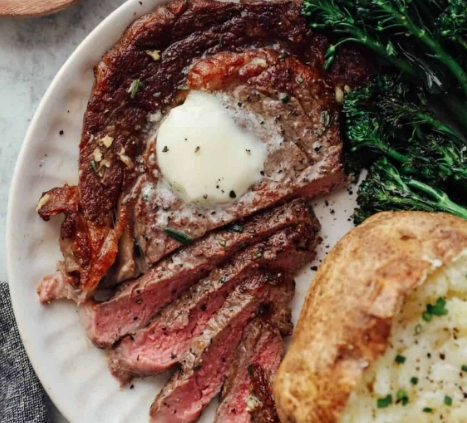
| Doneness | Final Resting Temperature | Description & Texture |
|---|---|---|
| Rare | 120-125°F (49-52°C) | Cool red center, very soft and juicy. For true steak lovers. |
| Medium Rare | 130-135°F (54-57°C) | Warm red center. The sweet spot for flavor and tenderness for most people, including me. |
| Medium | 140-145°F (60-63°C) | Warm pink center. Firmer, less juicy, but still very good. |
| Medium Well | 150-155°F (65-68°C) | Slight hint of pink. Starting to get dry and less flavorful. Not recommended for ribeye. |
| Well Done | 160°F+ (71°C+) | Gray throughout, tough, and dry. Cooking a beautifully marbled ribeye to well-done is, in my opinion, a culinary crime. All that fat renders out completely, leaving you with a tough piece of meat. |
The USDA recommends a minimum safe temperature of 145°F for beef with a 3-minute rest, which lands you in the medium range. For medium-rare (which is below that), you are accepting a marginally higher degree of risk. Always source your meat from a trusted supplier.
The Non-Negotiable Finale: Resting Your Steak
You cooked it perfectly. Now, for the love of all that is juicy, let it rest. When meat cooks, the juices are driven toward the center. If you cut it immediately, those hot, pressurized juices will flood onto your plate. Resting allows the fibers to relax and the juices to redistribute evenly throughout the steak.
How long? A good rule of thumb is about half the total cooking time, or at least 5-10 minutes for a standard steak. For a huge, reverse-seared ribeye, rest for 10-15 minutes. Tent it loosely with foil to keep it warm, but don't seal it tightly or it will steam and soften your hard-earned crust.
This is the perfect time to get your sides ready or make a quick pan sauce with the delicious browned bits (fond) left in your skillet.
Slicing and Serving Your Masterpiece
After resting, it's showtime. If you have a bone-in ribeye, cut the meat away from the bone first. Then, always slice against the grain. Look for the lines running through the meat—these are the muscle fibers. Slicing perpendicular to them (across the grain) shortens those fibers, making each bite much more tender. For a ribeye, the grain can change direction, so just do your best to cut across the visible lines.
Serve it immediately. Classic pairings? A simple arugula salad with shaved parmesan and lemon vinaigrette cuts through the richness. Creamy mashed potatoes or crispy roasted potatoes are always a win. Sautéed mushrooms or grilled asparagus are fantastic too.
Ribeye Recipe FAQs: Answering Your Burning Questions
Should I marinate a ribeye steak?
Generally, no. A good ribeye has so much inherent flavor and tenderness from its fat that it doesn't need a marinade. Marinades are for tougher cuts that need help (like flank or skirt steak). At most, you could do a simple, oil-based herb marinade for a few hours, but honestly, you're better off spending that time dry-brining with salt. A marinade can also prevent a good sear if the surface is too wet. Save the marinade for other cuts.
Why did my ribeye turn out tough?
Three likely culprits: 1) You overcooked it. Even a ribeye can become tough and dry if taken past medium. 2) You didn't rest it. Slicing too soon makes it seem dry. 3) You sliced with the grain. This makes the fibers long and chewy. 4) You bought a low-quality cut. A Select grade with little marbling will be less tender than Prime.
What's the best oil for searing a ribeye?
You need an oil with a high smoke point so it doesn't burn and turn acrid at the high temperatures required for searing. My top picks are avocado oil (smoke point around 520°F), refined safflower or sunflower oil (around 450°F), or grapeseed oil (around 420°F). Do not use extra virgin olive oil for the initial sear—it will smoke and burn. You can add butter later for flavor, as its milk solids will burn if used alone at high heat.
Can I cook a frozen ribeye?
You can, but it's not ideal. The best method for a frozen steak is a low-temperature oven (like 250°F) until it's mostly thawed and reaches an internal temp of ~90°F, then sear it as usual. This is essentially a reverse sear from frozen. Trying to sear a frozen steak directly will give you a charred outside and a cold, raw inside. The North American Meat Institute provides guidelines on safe thawing practices, which generally recommend thawing in the fridge for best results.
What's the difference between a ribeye and a prime rib?
Great question. They come from the same part of the animal (the rib primal). A prime rib is a large roast, typically 2-7 ribs thick, cooked as one large piece and then sliced. A ribeye steak is a single slice cut from that prime rib roast before cooking. So, when you cook a ribeye steak, you're essentially cooking an individual portion of prime rib. The cooking methods, however, are very different due to the size.
The journey to a perfect ribeye recipe is part science, part art, and 100% worth it. It might feel like a lot of steps, but once you've done it a couple of times, it becomes second nature. The payoff—a spectacular, restaurant-quality steak in your own home—is unbeatable.
Wrapping It Up: Your Ribeye Recipe Checklist
Let's boil this all down to a simple list you can check off next time you cook.
- Buy Right: Thick cut (1.5"+), good marbling, bright color.
- Prep Smart: Pat ultra-dry. Salt early if possible. Bring towards room temp.
- Choose Your Method: Pan-sear (best crust), Reverse Sear (most even), or Grill (smoky flavor).
- Heat Management: Get your surface screaming hot for the sear. Use a high-smoke-point oil.
- Don't Crowd: Cook one or two steaks at a time max.
- Don't Poke or Press: Use tongs. Let it sear undisturbed.
- Temp, Don't Time: Use a meat thermometer. Pull 5°F below your target.
- Rest, Rest, Rest: At least 5-10 minutes on a warm plate. No peeking!
- Slice Against the Grain: Find the lines and cut across them.
- Serve & Enjoy: You earned it.
There you have it. No more mystery, no more mediocre steak nights. This isn't just another ribeye recipe floating around the internet. It's the combined wisdom of chefs, butchers, and home cooks (like me) who've learned from their mistakes. Take these principles, apply them to your next beautiful ribeye, and get ready for the best steak of your life. I'm confident you can do it.
Now, if you'll excuse me, all this talk has made me hungry. I think I know what I'm making for dinner tonight.